
Last updated November 2, 2026
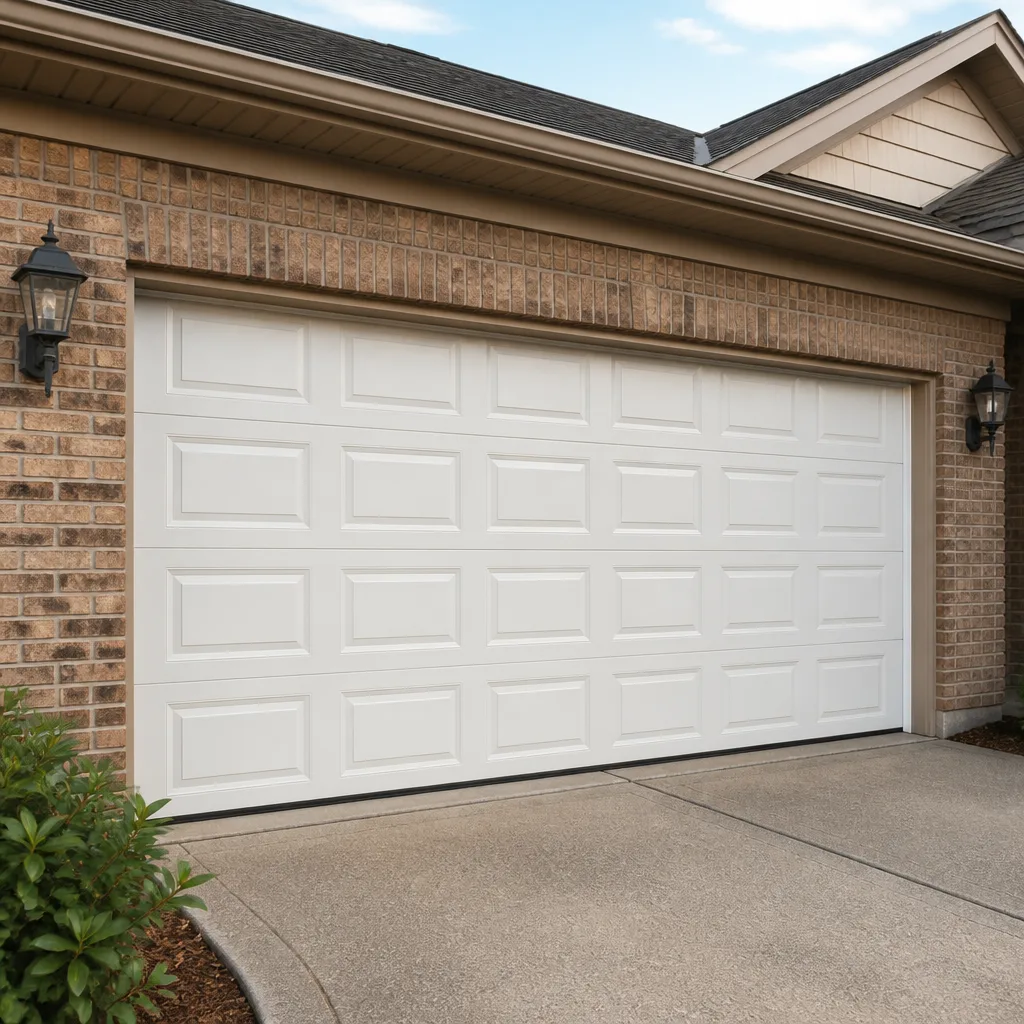 Raised-panel steel
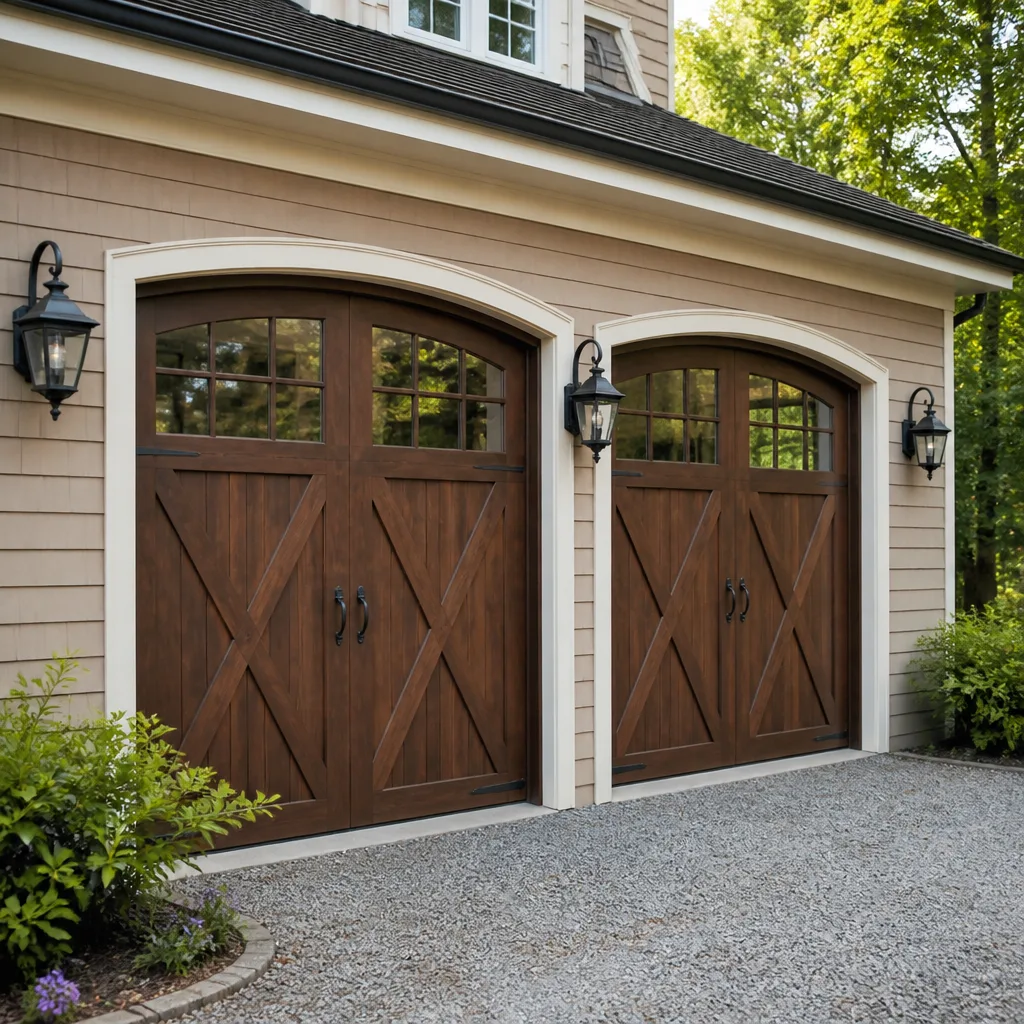 Carriage house
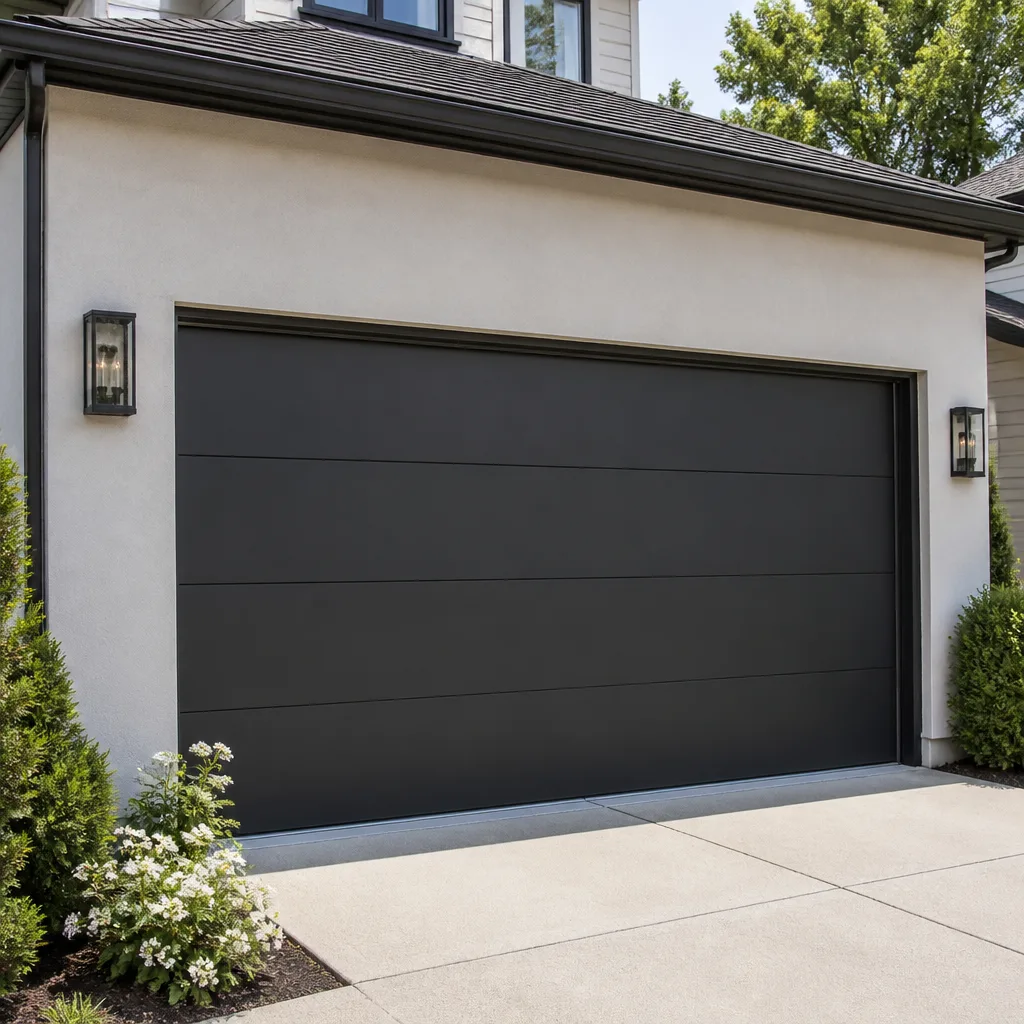 Modern flush
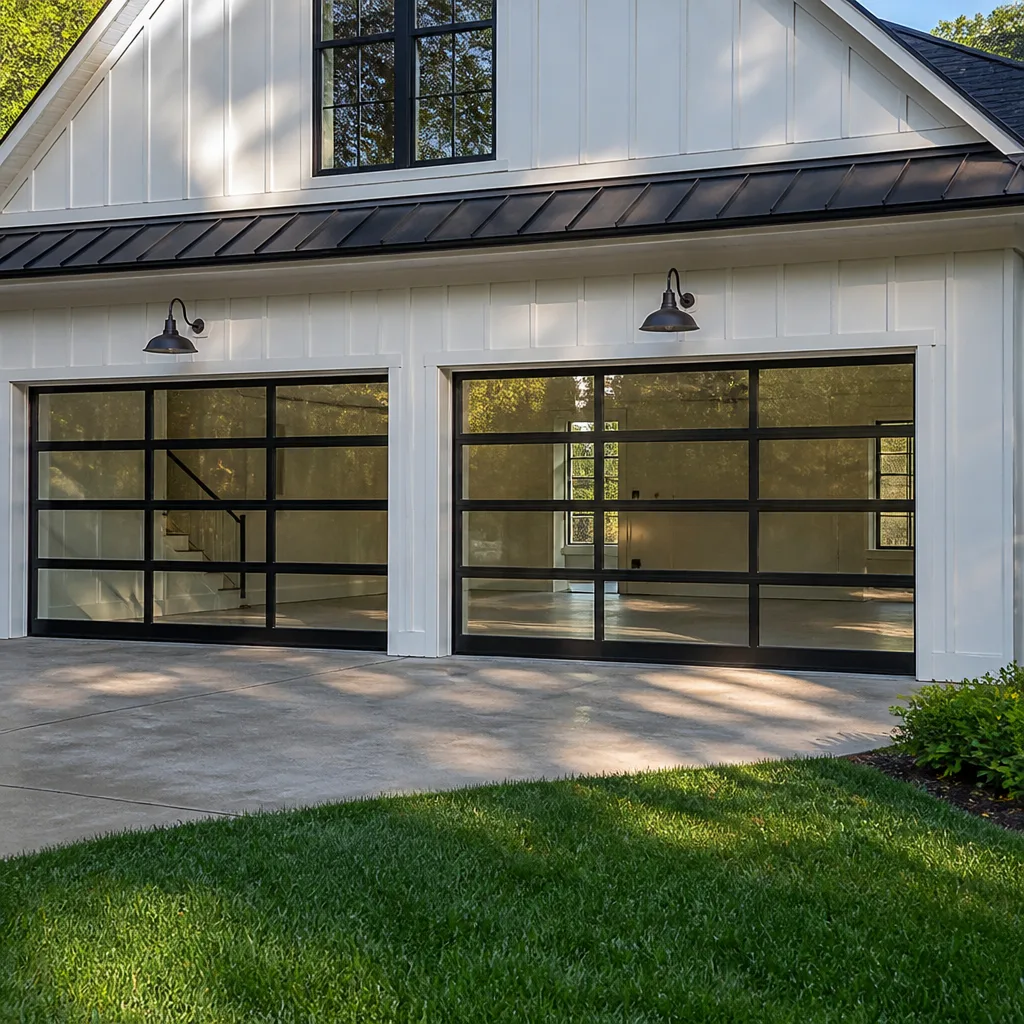 Full-view glass
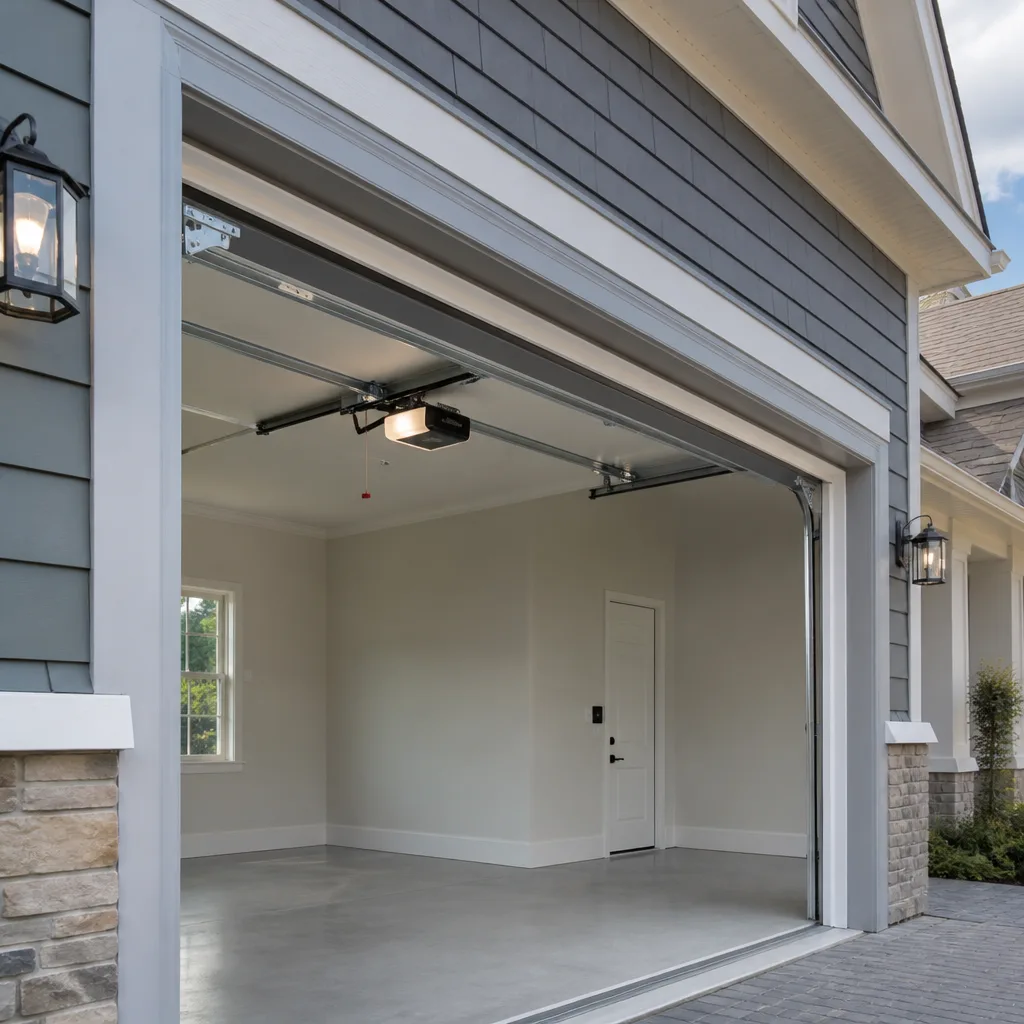 LiftMaster openers
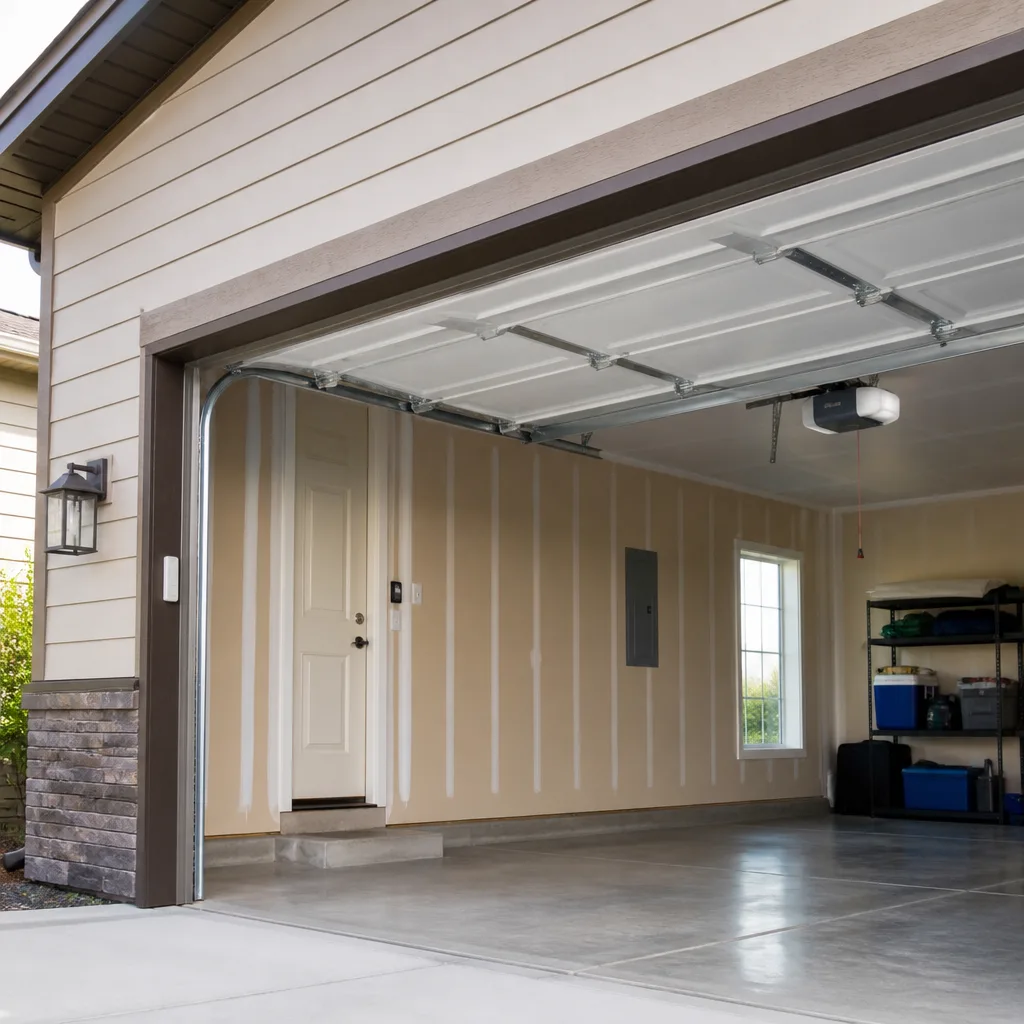 Chamberlain openers
Full 25-point door and opener safety check with every visit - springs, cables, rollers, tracks, and your LiftMaster or Chamberlain opener included
You get a price before we start. It does not change when the truck arrives.
Get your free estimateGarage Door Repair Maintenance Checklist for Burbank Homeowners
Here’s a number that surprises most Burbank homeowners: the single maintenance task we see skipped most often, lubricating the torsion spring shaft, is also the one that turns a $25 service call into a $300 spring replacement when it’s neglected long enough. Every week we get called to a home where a door that worked fine for years suddenly refuses to open, and the root cause was usually visible months earlier as dry metal, a loose bolt, or a slowly fraying cable. This guide walks through the maintenance tasks that actually prevent the breakdowns we see most in Burbank, ordered by how much damage they prevent, not by how easy they are to check off a list. For a deeper look at the failures we encounter, see our Garage Door Repair Troubleshooting: Common Problems and How to Fix Them. If you’d rather skip the reading and get eyes on your door, call us at (833) 589-9142 and we’ll walk through it together.
Quick Answer
A garage door maintenance checklist for Burbank homeowners should prioritize monthly lubrication of the torsion spring shaft and hinges, quarterly inspection of cables and rollers for wear, and semi-annual testing of the auto-reverse safety mechanism and door balance. In Burbank’s specific climate, west-facing garage doors should have their cable and roller inspection interval shortened to every two months because direct afternoon sun accelerates component degradation. Most breakdowns we see in Burbank trace back to one of three preventable failures: dry torsion springs, fraying lift cables, or opener force settings that have drifted out of tolerance.
Styles & brands we work with
- Raised-panel steel
- Carriage house
- Modern flush
- Full-view glass
- LiftMaster openers
- Chamberlain openers
Table of Contents
- The Frequency-Ranked Maintenance Checklist
- Lubrication: The Task That Prevents the Most Expensive Repair
- Why West-Facing Burbank Garages Need Shorter Inspection Intervals
- Surface Rust vs. Structural Rust: The 60-Second Test
- Opener-Specific Maintenance by Drive Type
- Before Calling a Tech: The Five-Issue Diagnostic Sequence
- Cables and Rollers: The Components That Fail Without Warning
- Seasonal Rhythm for Burbank Garage Doors
The Frequency-Ranked Maintenance Checklist
Most maintenance checklists you’ll find online were written for a national audience and organized alphabetically or by component type. That’s a nice way to organize a table of contents, but it’s a terrible way to prevent breakdowns. We’ve built this one backwards from the repair calls we actually take in Burbank. The tasks at the top are the ones that, when skipped, generate the most expensive and most common failures. The tasks at the bottom matter, but they fail more gracefully and less often.
Here’s the full list, ordered by failure impact:
- Lubricate the torsion spring shaft and springs – monthly during dry months, or at minimum every three months. Dry springs bind, grind, and eventually snap. A snapped torsion spring is the most common major repair we perform in Burbank.
- Inspect lift cables for fraying or rust – every two months for west-facing doors, quarterly for everyone else. A snapped cable drops the door unevenly and can bend the track or damage the opener carriage.
- Test the auto-reverse safety mechanism – monthly. This is the opener’s most critical safety function and the one that drifts out of calibration most often. It takes 30 seconds and requires no tools.
- Check door balance – quarterly. Unplug the opener, lift the door manually to waist height, and let go. A properly balanced door stays put. If it falls or rises, the springs are wearing unevenly.
- Tighten all track brackets and hinge bolts – quarterly. Burbank sees enough minor seismic activity that bolts work loose faster than in most cities.
- Clean and inspect rollers – every three to four months. Nylon rollers crack, steel rollers develop flat spots, and both wear much faster on doors that cycle more than four times daily.
- Clear the photo-eye lenses and check alignment – monthly. A dusty or misaligned photo eye is the single most common reason for a “door won’t close” service call, and it’s usually fixable in under a minute.
- Inspect weatherstripping along the bottom of the door and the side jambs – twice yearly. Burbank’s dry heat embrittles rubber seals faster than coastal climates do.
If that list feels like a lot, start with the first three. Those three tasks prevent the vast majority of the Garage Door Repair in Burbank calls we take. The rest add years to your door’s life, but the top three are where the money is.
Lubrication: The Task That Prevents the Most Expensive Repair
We’ll start with the task that matters more than any other on this list, because it’s the one we see skipped on nearly every first-time service call in Burbank. Torsion springs are under constant tension, and that tension causes the coils of the spring to rub against each other every single time the door moves. When the spring is properly lubricated, those coils glide. When it’s dry, they grind. The grinding creates friction points, the friction creates heat and micro-fractures, and the micro-fractures eventually snap the spring.
Here’s the sequence we follow on every maintenance visit, and it’s what we recommend to homeowners who want to do this themselves:
- Disconnect the opener by pulling the emergency release cord. You want to move the door manually so the lubrication distributes evenly through the spring coils.
- Apply a lithium-based spray grease or a silicone-based garage door lubricant directly to the torsion spring. Run a thin bead along the top of the spring while rotating the door slowly through one full cycle.
- Do not use WD-40. It’s a solvent, not a lubricant. It strips away the grease that’s already there and leaves the spring drier than before.
- Lubricate the torsion spring shaft bearings at each end of the shaft. These are the doughnut-shaped steel fittings where the shaft enters the end bearing plates. A dry end bearing makes a squealing noise that’s often misdiagnosed as a spring problem.
- Apply lubricant to each hinge pivot point along the door’s edge. The hinge between the top and second panel carries the most load and dries out first.
- Wipe away any excess with a rag. Pooling lubricant attracts dust and grit, which creates its own abrasive paste.
A note on frequency: Burbank’s summers are dry, and dry air accelerates lubricant evaporation. We recommend lubricating every month from June through October, and every three months during the cooler, damper months. If you’re running an Amarr or Wayne Dalton door with a torsion system, the interval matters just as much as it does on any other brand – the springs don’t care what name is on the panel, they care whether the lubricant is there.
Why West-Facing Burbank Garages Need Shorter Inspection Intervals
Burbank’s geography means that a large share of homes have garage doors that face west, into the full force of the afternoon sun. From May through September, a west-facing door in a neighborhood like the Rancho area or the hillside streets above Glenoaks can absorb six or more hours of direct sunlight daily. That solar load has a measurable effect on specific components, and it’s the reason we shorten our own recommended inspection intervals for these doors.
The components that degrade fastest under direct sun exposure are:
- Lift cables – the steel cables on the sides of the door are typically coated with a thin layer of vinyl or nylon to prevent corrosion. That coating breaks down faster under UV exposure, and once it cracks, moisture and oxidation reach the steel beneath.
- Weatherstripping – the rubber or vinyl seal at the bottom of the door embrittles under sustained heat. Once it stiffens, it stops compressing properly, and the resulting gap lets in dust, insects, and hot air.
- Nylon rollers – the nylon wheel itself holds up reasonably well under heat, but the bearing inside doesn’t. Bearing lubricant thins out faster, leading to noisy operation and eventually a seized roller.
- Exterior paint and panel coating – the panels themselves expand and contract with daily temperature swings, which accelerates paint cracking and can expose the underlying metal to corrosion.
For west-facing doors, we recommend checking cables and rollers every two months rather than every three or four. The inspection itself takes under ten minutes, and it catches the kind of cable wear that would otherwise show up as a sudden, uneven door drop in the middle of a summer afternoon. If you’re not comfortable inspecting your own cables, we do this as part of every maintenance visit, and the checks are also part of any Garage Door Installation in Burbank we complete.
Surface Rust vs. Structural Rust: The 60-Second Test
If you’ve lived in Burbank long enough, you’ve seen surface rust on a garage door at some point. The question every homeowner asks is whether that rust is a cosmetic issue or a structural problem. Most of the time it’s cosmetic, but the difference matters because structural rust on hardware is a safety issue, while structural rust on a panel usually just means the panel’s lifespan is shortening.
Here’s the test we teach homeowners, and it takes about 60 seconds:
- Find the rusted area. If it’s on a panel, a hinge, a bracket, or a track, proceed to step two. If it’s on a spring or a cable, stop and call a professional – those components are under tension and should not be poked at.
- Tap the rusted area with the flat side of a screwdriver or the tip of a key. Use light to moderate force.
- If the rust flakes off and reveals solid grey or brown metal underneath, it’s surface rust. Clean it with a wire brush, apply a rust converter or primer to halt the oxidation, and repaint if desired. You’re done.
- If the screwdriver sinks in, or if the tap produces a dull thud instead of a metallic ring, or if you can see through the metal after cleaning the rust away, that’s structural rust. The metal has lost its load-bearing capacity.
Structural rust on a hinge or bracket means that component needs replacement, which is a straightforward job. Structural rust on a section of track means the track’s integrity is compromised, and the safe move is to have the track section replaced. Structural rust on a panel means the panel’s metal is thinning, and if the door is more than 15 years old, replacement is often more cost-effective than repair, since a weakened panel can distort under tension and throw the whole door out of alignment.
On Craftsman and Raynor doors specifically, we see a pattern where surface rust on the bottom panel, near the weatherstripping, gets mistaken for structural rust because the rust stains spread outward from the seal. The test above removes the guesswork in about a minute.
Opener-Specific Maintenance by Drive Type
Your garage door opener is the most failure-prone component of the entire system, and the maintenance it needs depends on the drive type. Belt-drive, chain-drive, and screw-drive openers all have different wear patterns, and treating them identically is a good way to shorten their lives. Here’s what each type needs, and when.
Belt-Drive Openers
LiftMaster’s belt-drive models, along with many Chamberlain belt units, are the quietest openers on the market and the most common in Burbank’s newer homes. The belt itself is fiberglass-reinforced rubber, and it doesn’t need lubrication. The maintenance focus on belt-drive openers is on the carriage and the rail. The carriage slides along the rail on a nylon or steel guide, and that guide picks up dust and grime. Wipe the rail with a dry cloth every three to four months, and check the belt tension by pressing down on the belt at the midpoint of the rail. It should deflect about a half inch. More than that means the tensioner needs adjustment.
Chain-Drive Openers
Chain-drive openers are the workhorses, and they’re the type we see most often in Burbank’s older housing stock. The chain does need lubrication, and it needs it about every three months. Use a white lithium grease spray on the chain itself, and wipe away excess. A dry chain stretches faster, and a stretched chain eventually jumps the sprocket, which sounds like the opener is eating itself. That’s a call we get frequently, and the fix is almost always chain lubrication that never happened. The chain tension should be checked quarterly, and the sprocket on top of the motor unit should be inspected for wear at the same time.
Screw-Drive Openers
Screw-drive openers, which Genie made popular, have a threaded steel rod that the carriage travels along. The rod needs a specific type of lubricant – a low-temperature grease designed for screw drives, not the spray lithium that works on chains. Apply a thin layer to the threaded rod every three to four months, and run the opener through a full cycle to distribute it. Screw-drive openers are the most temperature-sensitive of the three types, and in Burbank’s summer heat, a poorly lubricated screw drive can bind and strip the carriage threads. That’s usually a replacement, not a cheap repair.
All three drive types share one maintenance task: testing the auto-reverse function. We covered it in the checklist above, but it bears repeating because it’s the one that protects your kids and your car. Place a 2×4 on the ground in the door’s path and close the door. If the door doesn’t reverse within two seconds of contacting the board, the opener needs recalibration. The photo-eye sensors also need cleaning and alignment verification monthly, because a misaligned photo eye is the most common reason a Burbank homeowner calls us for Garage Door Opener Repair in Burbank that they could have fixed themselves in 60 seconds.
Before Calling a Tech: The Five-Issue Diagnostic Sequence
We lose count of how many service calls we take in Burbank that could have been avoided with five minutes of checking. To be clear, we’re glad to come out, and we never charge for a call where the fix is as simple as plugging something in. But if you’d rather save the trip, here’s the sequence we walk through over the phone, and it resolves about a third of the calls before they become visits.
- Check the power source. Is the opener plugged in? Is the outlet live? Is there a GFCI breaker on that circuit that’s tripped? Burbank homes from the 1970s and 1980s sometimes have the garage outlet on the same GFCI circuit as a bathroom or exterior outlet, and a tripped GFCI kills the opener.
- Check the emergency release. If the release cord was pulled, the opener carriage is disconnected from the door, and the door won’t move even though the opener runs. Re-engage the carriage by pulling the cord toward the opener and running the opener through a full cycle.
- Check the photo-eye sensors. If the door closes a few inches and reverses, or if the opener lights flash but the door won’t close, the photo-eye sensors at the base of the door are either dirty, misaligned, or blocked. Clean the lenses, make sure they’re pointed at each other, and clear anything in their path.
- Check the manual operation. Pull the emergency release and try to lift the door by hand. If it’s heavy, the springs have lost tension. If it’s light and stays up, the opener is the problem. This single test isolates the door from the opener and saves most of the diagnostic time.
- Check the wall button and remote batteries. If the door opens from the wall button but not the remote, it’s a remote battery or programming issue. If neither works, look at the power source and the opener’s internal breaker.
If none of those five checks resolve the issue, you’re looking at a spring, cable, track, or opener component failure, and that’s a call worth making. We service Amarr, Wayne Dalton, Craftsman, Raynor, and the other major brands, and we’ll tell you over the phone whether you’re looking at a repair or a replacement before we even show up.
Cables and Rollers: The Components That Fail Without Warning
Cables and rollers are the two components that fail most dramatically in Burbank, because they give almost no visual warning to the untrained eye. A spring creaks before it snaps. A track bends gradually and the door gets noisier. But a cable lets go all at once, and a roller seizes and then cracks under load, and both happen in the middle of a normal operating cycle when the door is half open.
The lift cables on a standard residential door are rated to carry the full weight of the door many times over, but that rating assumes clean, undamaged cable. The most common cable failure point is where the cable attaches to the bottom bracket, because that’s where moisture collects after rain, and it’s also where the cable flexes most often. Look for frayed strands, rust staining, or a cable that’s gone fuzzy at the bottom end. Any of those signs means replacement is urgent, not scheduled.
Rollers fail in two ways. Steel rollers, common on older Burbank doors, wear flat spots on the wheels and then bind in the track. The door jerks as it moves, and eventually the roller seizes completely. Nylon rollers, standard on most doors made since 2005, crack around the outer edge as the nylon ages and loses flexibility. A cracked roller still rolls, but the crack widens under load, and eventually the wheel shatters. The sad part is that rollers are cheap, replacing a set of 12 costs a fraction of what a bent track or a damaged panel costs, and the replacement takes under an hour. We mention this because the repair calls we get for roller-related damage are almost always on doors that hadn’t had their rollers inspected in years.
Seasonal Rhythm for Burbank Garage Doors
Burbank doesn’t have seasons the way Minneapolis does, but it has a rhythm. The garage door maintenance calendar here follows the temperature, not the calendar, and the two toughest stretches are the Santa Ana periods in fall and the sustained heat of late summer.
Here’s how the year breaks down for a Burbank garage door:
- June through September: Peak heat and peak dryness. Lubricate monthly, check west-facing cables and rollers every two months, and keep an eye on weatherstripping, which embrittles fastest in this stretch. If you’re installing a new door, this is the season when panel expansion is most extreme, so installation tolerances matter most.
- October and November: Santa Ana season, and the windiest stretch of the year. The big risks here are debris in the track and gusts that test a door’s balance. A door that’s slightly out of balance will suddenly feel worse when the wind catches it, so do the balance test before the winds arrive.
- December through March: The cool, occasionally damp months. This is the season for surface rust development on steel hardware, especially on doors that face north or sit under a roof overhang that channels rainwater onto the door. Lubrication can drop to quarterly, but cable inspection should stay at quarterly as a minimum.
- April and May: The transitional months, and the best time for a comprehensive maintenance pass, because the door is about to take the summer load on its weakest lubrication. If we had to recommend one maintenance visit a year in Burbank, it would be in late April or early May.
One Burbank-specific note: if you live in the Verdugo foothills or anywhere with wildland interface, the summer brings dry brush and occasional fire-watch days. A garage door that won’t close properly isn’t just an inconvenience in those conditions. The photo-eye and auto-reverse checks are worth keeping absolutely current if you’re in that zone.
Common Mistakes to Avoid
- Skipping lubrication and calling it a “dry climate” thing. Burbank’s dry air actually makes lubrication more important, not less, because lubricant evaporates faster. A dry spring in July is a broken spring by September.
- Using WD-40 as a garage door lubricant. It’s the most common mistake we see, and it actively harms your door by stripping existing lubricant. Use a lithium spray grease or silicone-based garage door lubricant.
- Adjusting or replacing torsion springs without proper training. Torsion springs store enough energy to cause serious injury or death. The winding cones on a standard Burbank residential door are under significant tension. Call a professional.
- Painting over rust without addressing it. Paint traps moisture and accelerates corrosion from the inside. Treat the rust first, then paint.
- Ignoring a noisy door because “it still works.” A grinding or squealing door is a door telling you something’s dry, worn, or misaligned. By the time it stops making noise, the component has usually failed.
- Skipping the photo-eye alignment check because “it was fine last month.” It’s a 30-second check that prevents the most common no-close service call we take in Burbank. Just do it.
See the difference
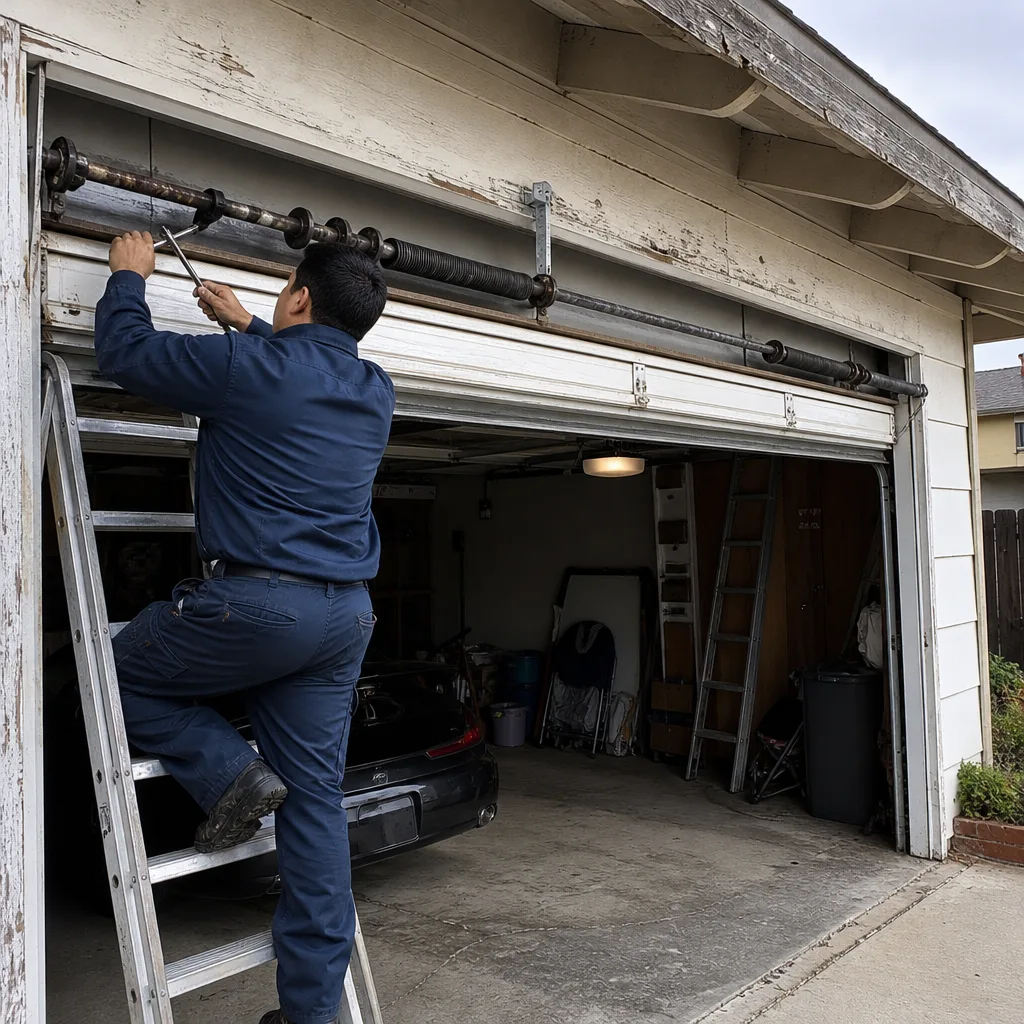 Before
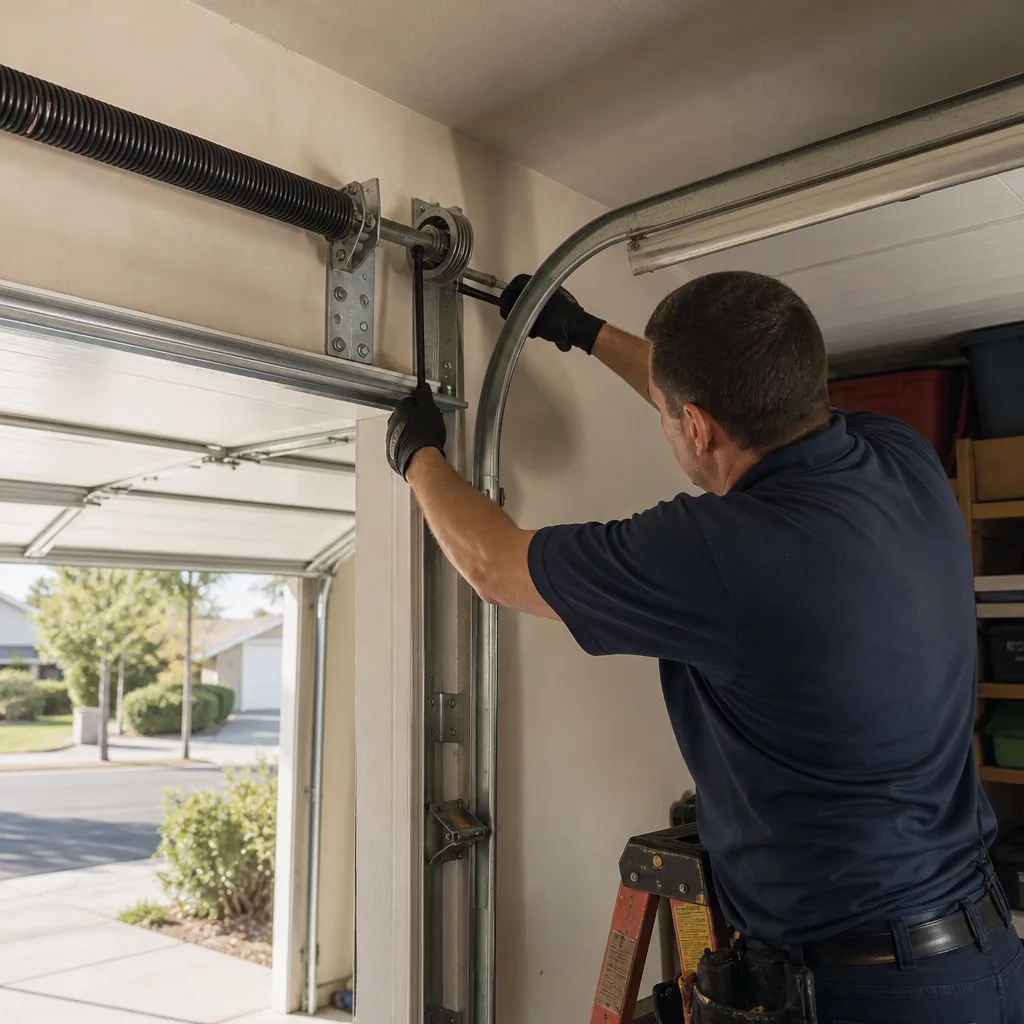 After
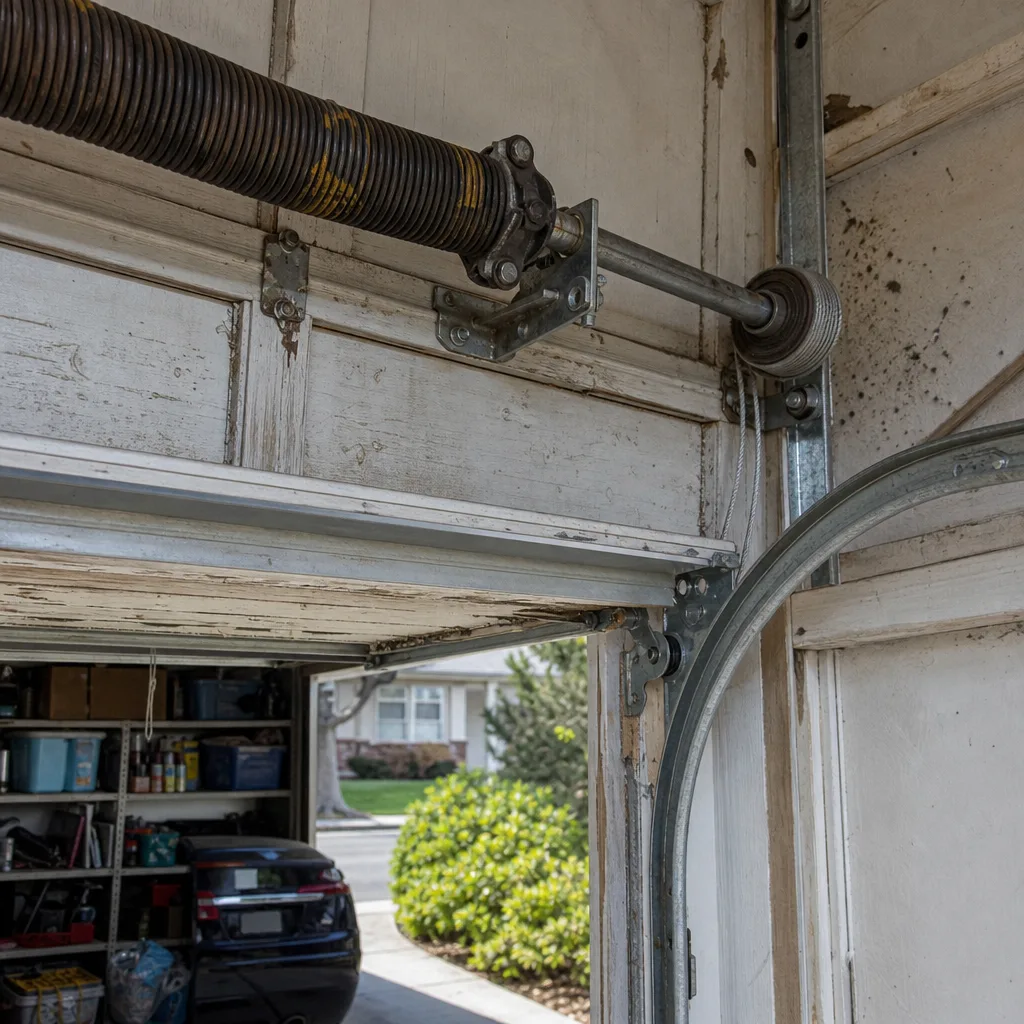 Before
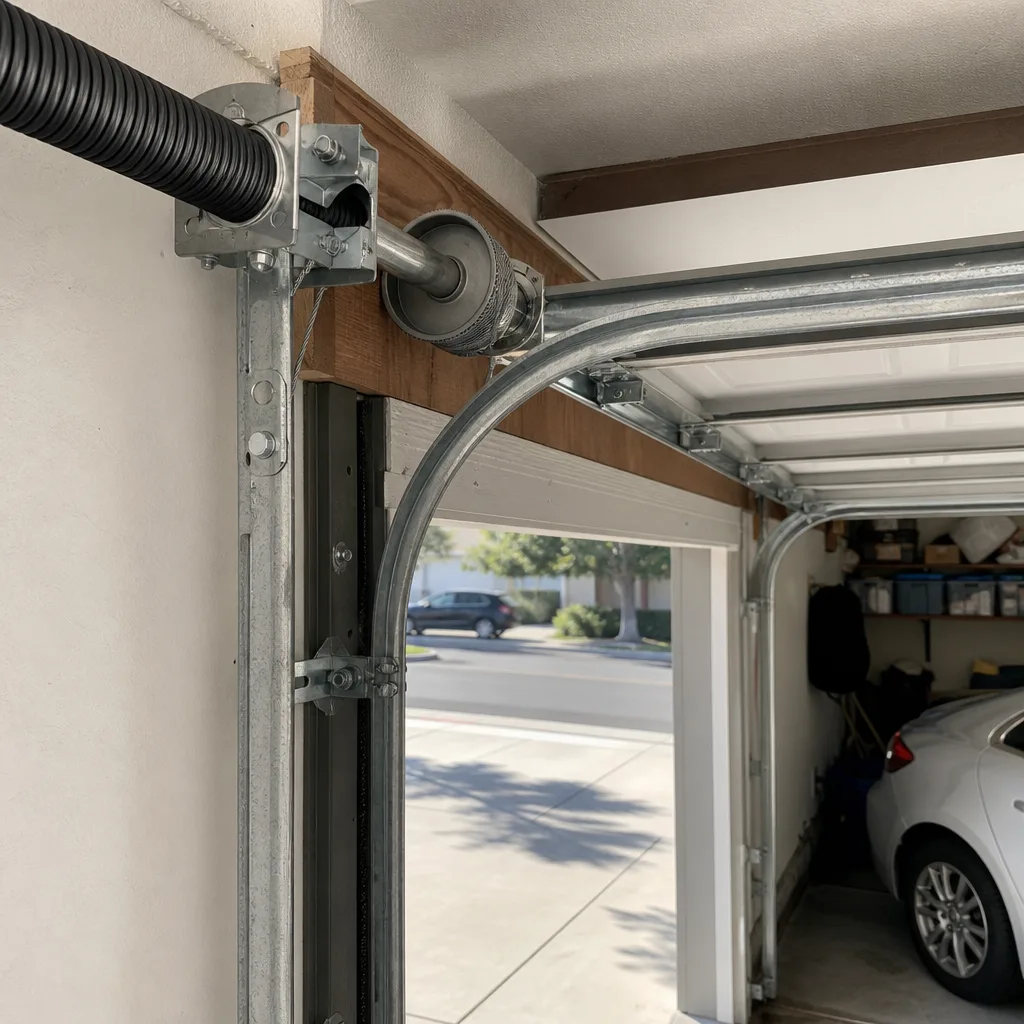 After
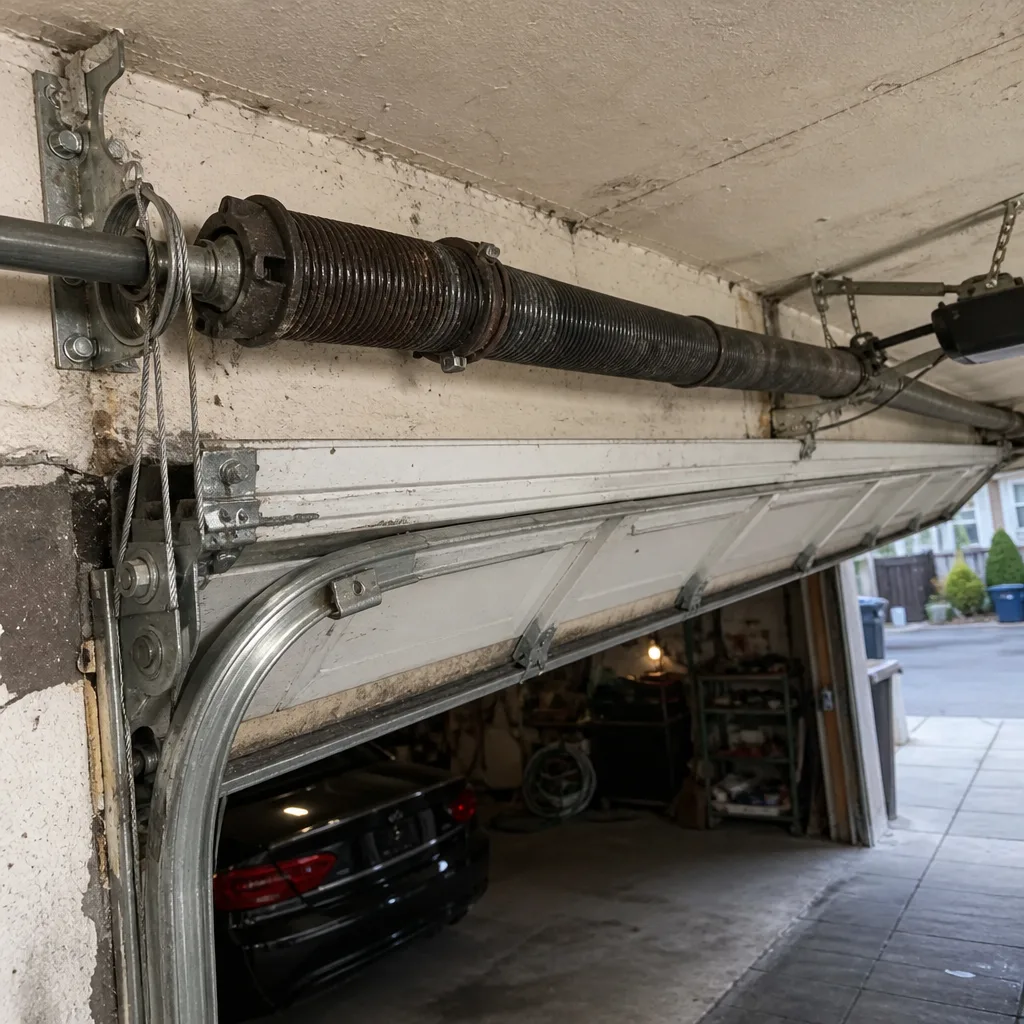 Before
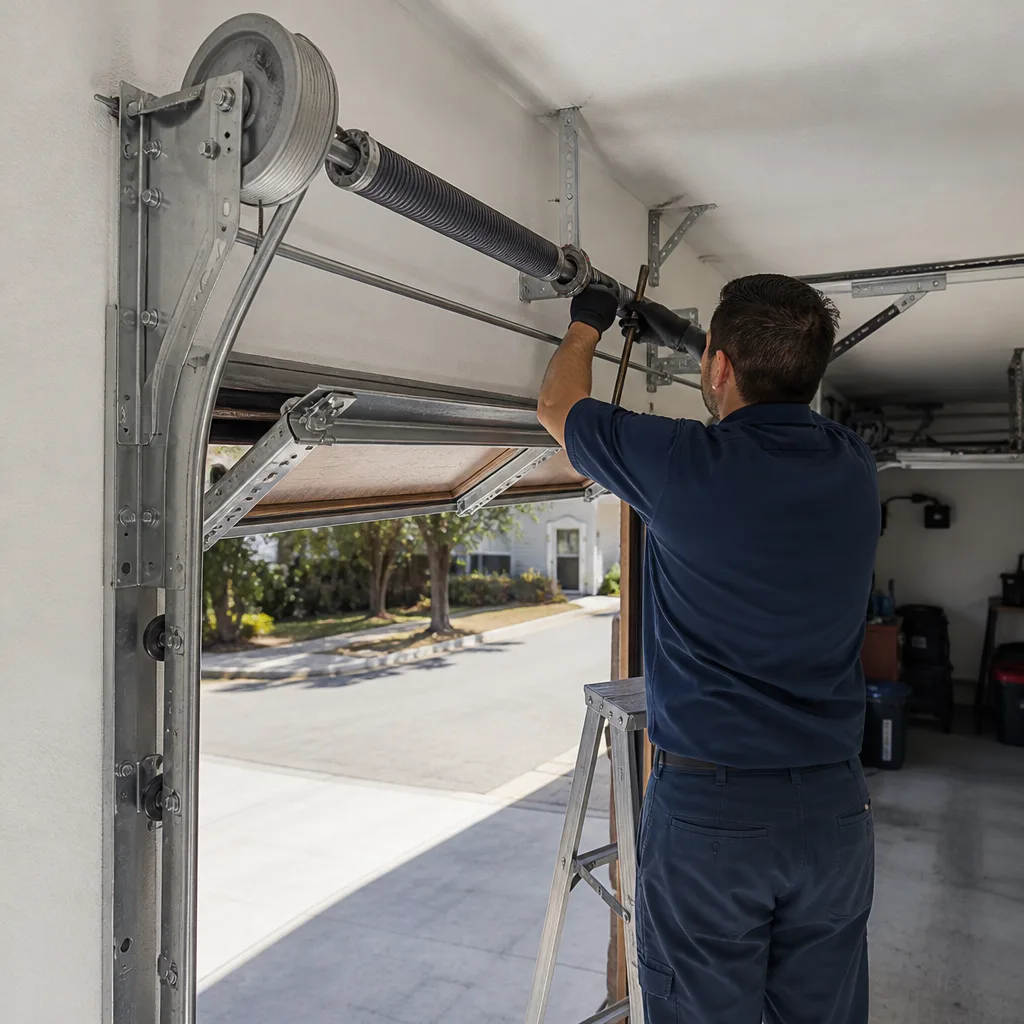 After
When to Call a Professional
You should call a professional when the issue involves the torsion springs, the lift cables, or any component under tension. Attempting to repair or replace these yourself can cause serious injury. You should also call when your door has come off its track, when the opener’s motor runs but the door doesn’t move, when a cable has snapped, or when the door sags to one side when open. These are all symptoms of structural or tension problems, not maintenance gaps. Anchor Garage Door Repair offers our Garage Door Repair services with free estimates in Burbank; call (833) 589-9142 and we’ll tell you what’s wrong, what it costs to fix, and what it costs to leave alone. The price is quoted and agreed before any work starts.
Frequently Asked Questions
Lubricate your garage door monthly from June through October, when Burbank’s dry heat evaporates lubricant fastest, and every three months during the cooler months. Use a lithium spray grease or silicone-based lubricant on the torsion springs, hinges, and rollers, and never use WD-40. Call (833) 589-9142 if you’d rather have us handle it.
Garage door spring replacement in Burbank typically runs between $180 and $340 for a standard torsion spring pair, depending on spring size and door weight. The price is quoted and agreed before any work starts. Call (833) 589-9142 for an exact quote, estimates are free.
We stock the most common springs, cables, rollers, and opener parts on our trucks, so most Burbank service calls are completed the same day we arrive. If your opener needs an uncommon part, we’ll tell you before the work begins and schedule a return. Call (833) 589-9142 to check availability today.
That’s almost always the photo-eye safety sensors, which are either dirty, misaligned, or blocked. Clean both lenses, make sure they’re pointed directly at each other, and clear any debris between them. If the door still reverses, the sensors may need wiring repair or replacement.
We service LiftMaster, Chamberlain, Genie, Clopay, Amarr, Wayne Dalton, Craftsman, and Raynor doors and openers. If you’ve got a different brand, call us and we’ll diagnose it anyway, symptoms and mechanics matter more than the name on the panel.
The warning signs are a door that gets suddenly heavy when you lift it manually, a door that won’t stay open at waist height, visible gaps in the spring coils, or a loud bang when the door operates. Any of those means the springs need replacement soon, and it’s a call worth making before the door fails mid-cycle. Call (833) 589-9142 for an assessment.
The Bottom Line
Burbank’s climate punishes garage doors in specific ways: dry heat evaporates lubricant, afternoon sun degrades west-facing cables and rollers, and the rainy months feed surface rust that spreads quietly. The difference between a door that lasts 12 years and one that lasts 30 is mostly boring, unglamorous maintenance: lubricating the torsion spring shaft, checking cables before they fray, testing the auto-reverse function, and cleaning the photo-eye sensors. None of it is hard, and all of it is cheaper than the repair it prevents. For more guides & resources, explore our blog. If you’d rather not think about your garage door at all, that’s what we’re for. Anchor Garage Door Repair is based in Burbank and covers maintenance, repair, opener work, and full installation. Call (833) 589-9142 for a free estimate.
Written by the team at Anchor Garage Door Repair, serving Burbank since 2011.