
Last updated November 2, 2026
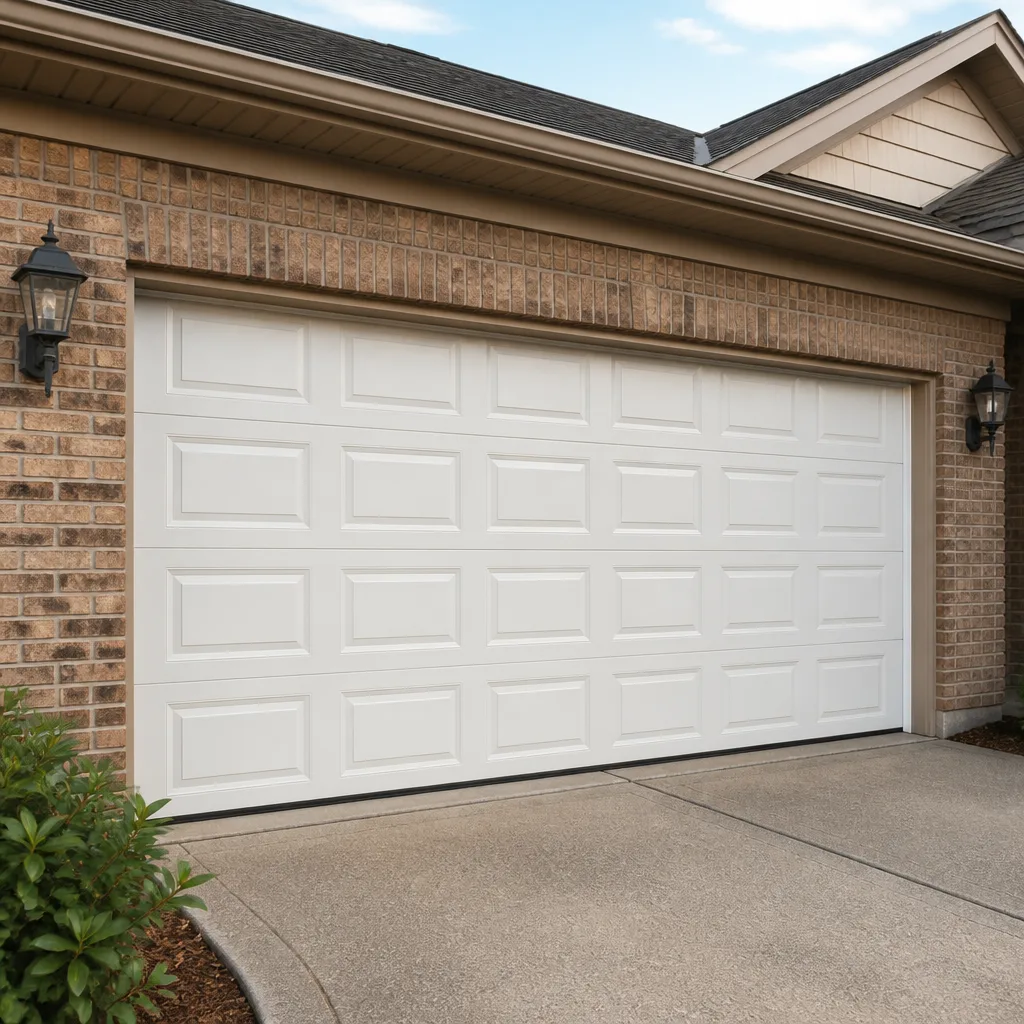 Raised-panel steel
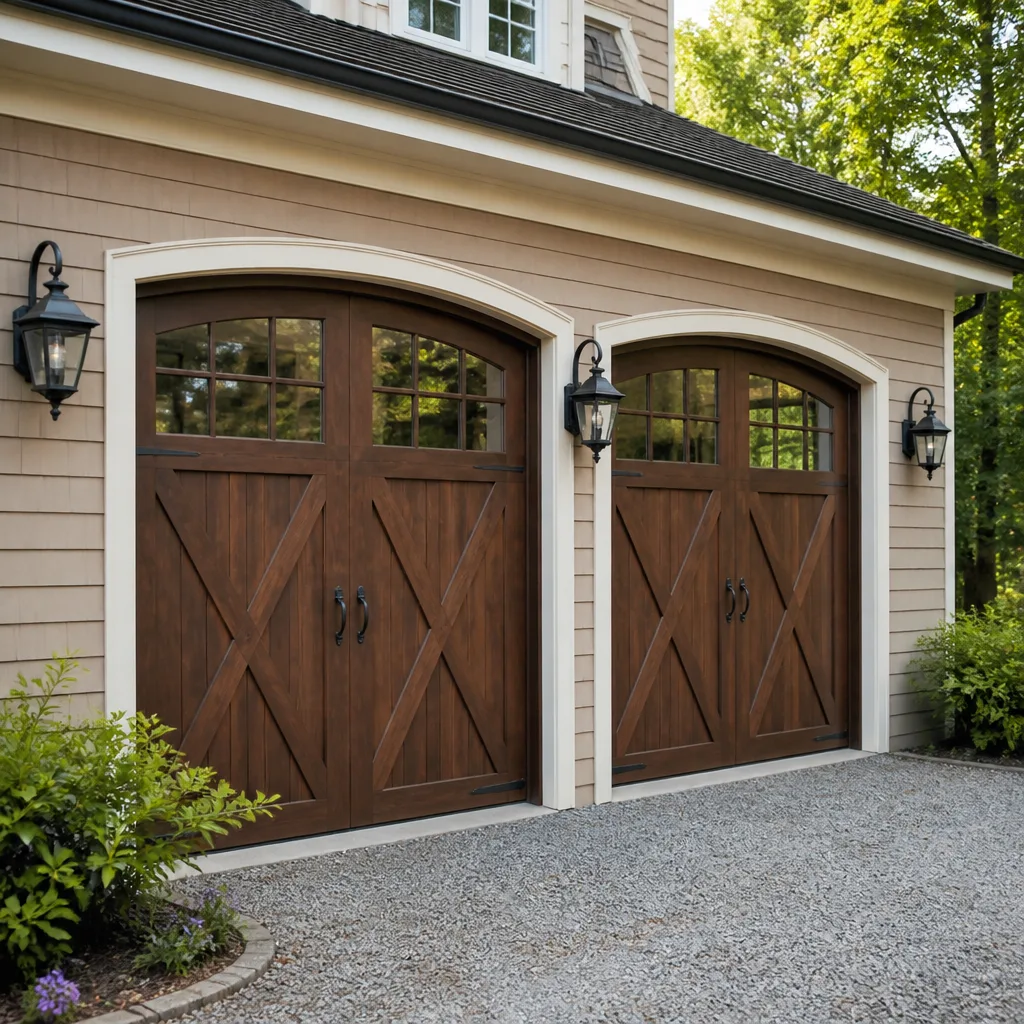 Carriage house
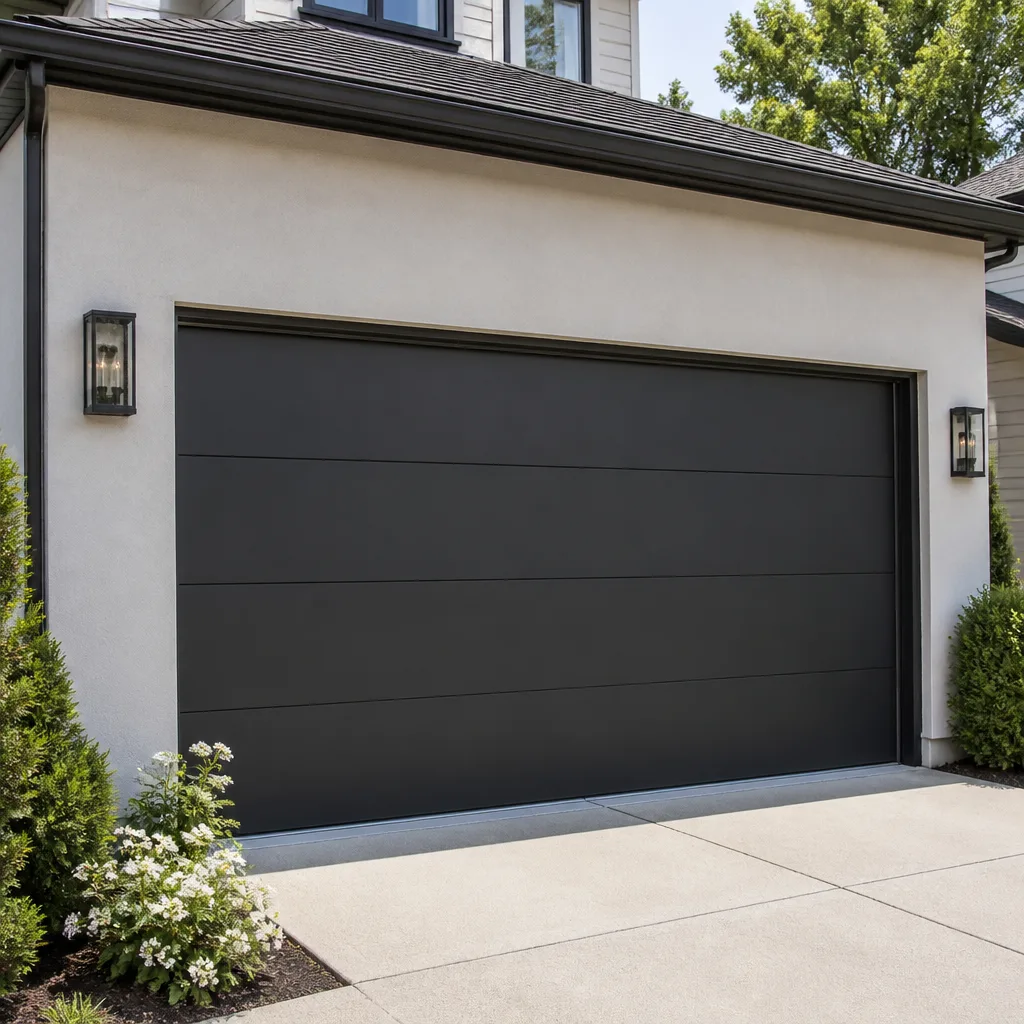 Modern flush
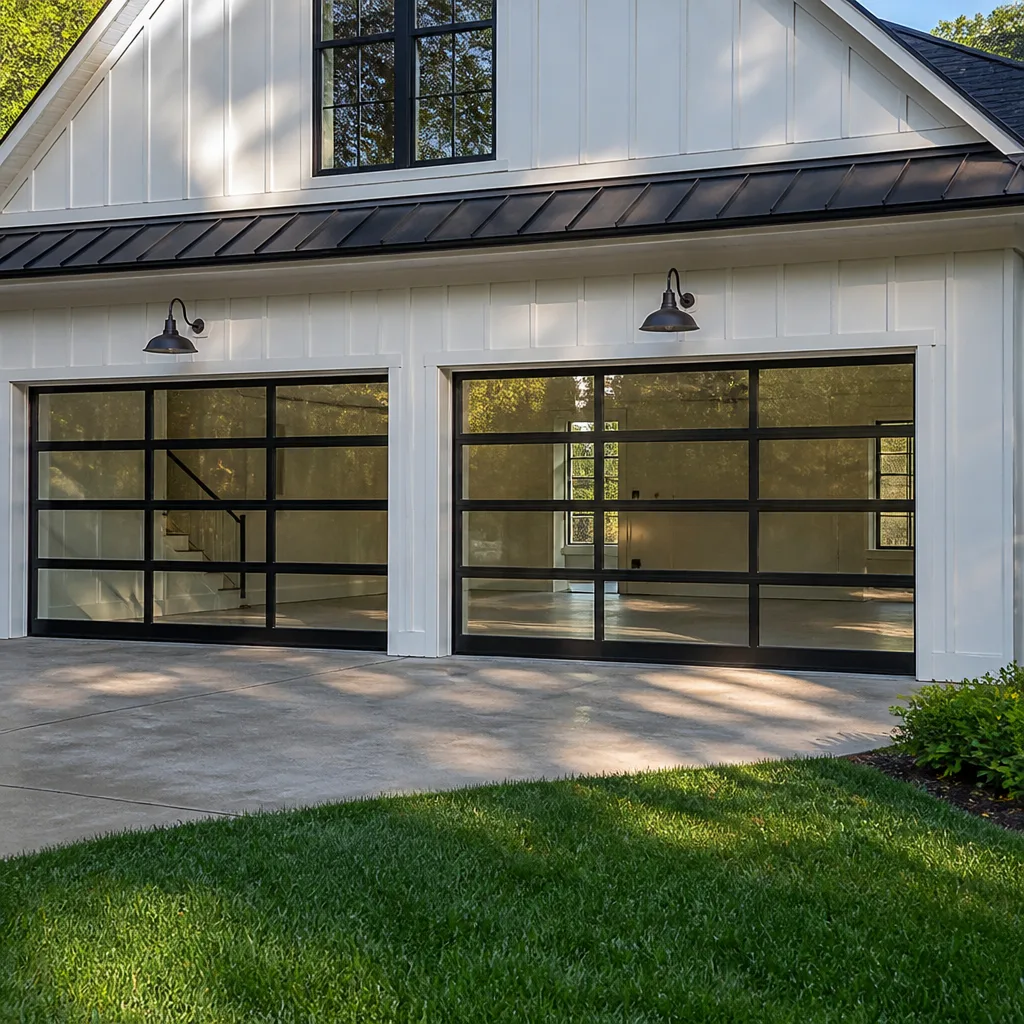 Full-view glass
 LiftMaster openers
 Chamberlain openers
Full 25-point door and opener safety check with every visit - springs, cables, rollers, tracks, and your LiftMaster or Chamberlain opener included
You get a price before we start. It does not change when the truck arrives.
Get your free estimateGarage Door Warning Signs: A Burbank Homeowner’s Reference Guide
Here’s a statistic that surprises most Burbank homeowners: the majority of garage door failures that require emergency service give off clear warning signs for two to six weeks before anything actually breaks. The door doesn’t just fail one morning without precedent. It’s been talking to you the whole time. The problem is that most warning-sign lists stop at “if you hear grinding, call someone.” This guide goes further. You’ll learn what those sounds and movements mean mechanically, which lets you describe the problem accurately and understand what a technician tells you. Every symptom below is something we’ve diagnosed on doors throughout Burbank, from the Magnolia Park bungalows to the hillside homes off Barham, and each one points to a specific mechanical issue rather than a vague need for “service.”
Quick Answer
The most common garage door warning signs in Burbank are a door that shudders or jerks while moving, a grinding or squealing noise that wasn’t there before, visible cable fraying, a door that reverses without touching anything, and a safety sensor that responds slowly on test. Any one of these, left unaddressed, typically escalates to a full failure within weeks. Most are repairable same-day when caught early; ignored, they turn into spring replacements, cable replacements, or door damage that costs three to five times more.
Styles & brands we work with
- Raised-panel steel
- Carriage house
- Modern flush
- Full-view glass
- LiftMaster openers
- Chamberlain openers
Table of Contents
- Symptom-to-Cause: What Your Door Is Actually Telling You
- The Five-Minute Ground-Level Inspection
- Spring, Cable, or Opener: Telling Three Lookalike Problems Apart
- Why Burbank’s Climate Shortens Certain Component Lifespans
- The Safety Sensor Question Nobody Asks Until It’s Too Late
- What Needs Same-Day Attention and What Can Wait a Week
- Warning Signs We See Disproportionately in Burbank Homes
- What a Technician Hears in Your Description
Symptom-to-Cause: What Your Door Is Actually Telling You
A garage door that “shudders going up but feels fine coming down” is not having a random moment. That asymmetry is a spring tension balance problem. The torsion spring above the door is responsible for counterbalancing the door’s weight, and when it loses tension on one side or begins to fatigue, the door rises unevenly. The opener motor compensates by working harder, which is why you might also notice the motor sounding strained only on the up cycle. Left alone, that uneven tension transfers to the lift cables, and within weeks one cable typically snaps. The cable snap is the emergency. The shudder was the warning.
Here’s a translation table for the symptoms Burbank homeowners describe to us most often, mapped to what’s actually happening underneath the noise:
| Symptom | What It Feels/Looks Like | What It Actually Means | Typical Cause |
|---|---|---|---|
| Shudder or jerk on the way up | Door starts smoothly, then hitches once or twice | Uneven spring tension; door weight not balanced side to side | Worn torsion springs or a spring that’s lost adjustment |
| Squeal or high-pitched whine | Consistent noise, same pitch each cycle | Metal-on-metal friction at the rollers or hinges | Dry rollers, worn roller bearings, or hinge pins without lubrication |
| Grinding or rumbling | Low, rough sound, worse under load | Roller contact with a warped or rusted track, or roller bearings that have failed | Worn rollers or a track that’s out of alignment |
| Bang or thump when the door reaches the floor | Door bottoms out hard despite the opener’s soft-close | The door is closing faster than the opener can control | Weak or broken tension spring; opener is holding the door back alone |
| Visible gap between coils of the torsion spring | You can see a space where the spring should be continuous | The spring has snapped | Spring fatigue; the door will not lift on its own |
| Door moves slowly in one direction | Opener sounds like it’s struggling, door crawls | Opener is working against added resistance | Failing spring, misaligned track, or opener gear wear |
| Door starts to go down, then reverses with nothing in the way | Stops halfway, reverses to open | Safety sensor signal interruption OR force setting triggered by increased resistance | Misaligned photo eyes, damaged sensor wiring, or a door binding in the track |
| One cable looks slack while the other is taut | Cable on one side sags visibly | The cable has come off the drum or the drum has slipped | Spring imbalance or a door that’s been run after a spring break |
The point of this table isn’t to make you a technician. It’s to give you the vocabulary to describe what you’re seeing accurately. “My door shudders on the way up” tells a tech something. “My door is broken” tells them nothing, and it means the first service call is spent on diagnosis instead of repair. In Burbank, where homes range from 1940s builds with original hardware to newer Toluca Lake adjacent construction, the underlying issue varies wildly by door age and brand, which is why Choosing the Right Garage Door Brand: A Buyer’s Guide for Burbank matters even after installation. We work on Clopay, Amarr, and Genie systems frequently in this area, and a Clopay door from 2005 behaves differently than an Amarr door from 2019. The symptom language stays consistent even when the hardware doesn’t.
The Five-Minute Ground-Level Inspection
You don’t need a ladder. You don’t need tools. You need five minutes, your eyes, and your ears. This inspection, done monthly, identifies most developing failures before they become emergencies. We’re not asking you to touch anything under tension. We’re asking you to look and listen.
Do this from ground level, with the door closed. Do not reach into the mechanism, do not touch springs or cables, and do not put your hand anywhere near the track while the door is in motion. Here’s the sequence:
- Stand inside the garage and look at the door’s surface from the inside. Note any denting, bowing, or staining. Water staining along the bottom section of a wood door is a rot warning. On steel doors, look for rust bloom at panel joints.
- Look up at the torsion spring. If you see a visible gap in the spring’s coils, the spring has snapped. Do not attempt to operate the door. Call a professional.
- Look at both lift cables. They should both be taut and wound neatly around their drums. A frayed cable looks like a rope that’s unravelling at the edges. A slack cable is an emergency warning.
- Trace the track line with your eyes. Follow the vertical track from floor to curve, then the horizontal track back to the opener. Look for gaps between the track and wall, visible bends, rust, or a track that’s pulled away from its mounting brackets.
- Run the door and listen to each phase. The first two feet of travel, the middle section, and the final six inches. Note where sounds appear. A noise only in the first two feet points to a track or roller issue at the bottom. A noise near the top points to the spring or the opener gear.
That’s it. Five minutes, once a month. The Burbank angle here matters because our dry season leaves roller bearings and hinge pins without natural lubrication, and when the Santa Ana winds push dust through garage vents, that grit finds its way into track grooves. Most doors in Burbank develop roller and hinge noise faster than coastal homes simply due to dust accumulation and low humidity, which is exactly what our Seasonal Garage Door Care for Burbank: Year-Round Homeowner’s Guide addresses.
Spring, Cable, or Opener: Telling Three Lookalike Problems Apart
Here’s the frustrating truth about garage door repair: a failing spring, a frayed cable, and a worn opener gear can all produce nearly identical symptoms. A door that’s slow to open can be any of the three. So can a door that shudders, a door that won’t stay closed, or a door that makes a grinding sound. And the repair cost for each is different, which means homeowners reasonably want to know what they’re dealing with before booking a call.
The way to distinguish them is to isolate variables. Here’s the process a technician uses, simplified for homeowner understanding:
- Spring problem: The door’s tension comes from the torsion spring, not the opener. If the spring is weak or broken, the door itself feels heavy when manually lifted. Pull the red release cord with the door down, then try to lift the door by hand. A properly balanced door lifts smoothly with moderate effort and stays at chest height on its own. A door that feels extremely heavy or won’t lift at all points to a spring. A door that shoots up when released from the opener points to a spring that’s over-tensioned.
- Cable problem: Cables work in tension, not compression. A frayed cable is visible if you look. A cable that’s jumped the drum leaves the door visibly crooked when opening, with one side lagging. The giveaway: the door returns to level when fully open (where the track’s horizontal section masks the imbalance) but tilts visibly during travel.
- Opener problem: The opener’s job is to move the door. It’s not designed to carry the door’s weight. When the opener is the failure point, you’ll often hear the motor running but the door not moving, or moving in a jerky, hesitant way that doesn’t match a specific section of travel. A stripped gear feels like the door “slips” partway through the cycle. The spring test above is the key: if the door lifts smoothly by hand but won’t move when the opener runs, the opener is the culprit. If the door is heavy by hand, the opener may be working harder to compensate for a spring issue, and the spring is primary.
There’s a reason garage door opener repair in Burbank is a dedicated specialty rather than an add-on in our service list. The opener is the most failure-prone component in any system, and homeowners tend to misdiagnose opener problems as door problems, or spring problems as opener problems. The three overlap in symptom territory, and misdiagnosis at the start means paying for the wrong repair. We repair doors, openers, and install new systems under one roof, which means the diagnosis comes from knowing how all three interact, not from guessing which part happens to be our specialty.
The brand dimension matters here too. A Chamberlain opener from 2012 has different gear material than a Genie opener from 2018. A homeowner who says “my Chamberlain is grinding” is telling a technician something actionable about likely gear wear. A homeowner who says “my opener is making noise” is asking the technician to start from zero. You don’t need to be brand-fluent. But knowing your opener brand, and your door brand, shortens the diagnostic conversation meaningfully.
Why Burbank’s Climate Shortens Certain Component Lifespans
Garage door hardware has rated lifespans that assume a neutral climate: moderate humidity, stable temperatures, minimal dust. Burbank violates all three assumptions. Understanding how local conditions accelerate wear helps you spot problems earlier and makes sense of why a door that should last twenty years starts showing symptoms at twelve.
Here’s what Burbank’s specific environment does to your door:
- Low humidity dries out roller bearings and hinge pins. Grease doesn’t evaporate like water, but it does harden and lose viscosity faster in dry heat. A roller that starts life rolling quietly becomes a metal-on-metal grinder in three to five Burbank summers.
- Santa Ana events blow fine dust into every mechanical gap. That dust lands on the torsion spring (which sits in the open air inside your garage), mixes with the spring’s factory grease, and forms a gritty paste that increases spring friction. More friction means more heat. More heat means faster spring fatigue.
- Temperature swings between day and night cause subtle metal expansion cycles. Garage door tracks are mounted to walls. The wall warms up during the day, cools at night, and the track expands and contracts minutely each cycle. Over years, that repeated expansion loosens track brackets. A track that’s drifted a fraction of an inch changes roller pressure, which creates the grinding sound that eventually becomes a roller failure.
- Summer heat in an uninsulated garage accelerates electronics wear in opener circuit boards. The motherboard inside your opener, whether it’s a Chamberlain or a Genie, generates heat when operating. In a garage that sits at 110°F in August, that board is already running at its thermal ceiling before the opener even activates. Heat-related circuit board failure is disproportionately common in Burbank openers compared to coastal units.
None of this means your door is doomed early. It means the inspection rhythm matters more here than in, say, a fog-belt coastal town. Doors in Burbank give earlier and clearer warning signs precisely because the environment stresses them harder. The homeowner who catches a developing roller issue at month three of noise avoids the snapped roller and derailed door at month six. Our work across garage door repair in Burbank shows the same pattern repeatedly: doors in this climate telegraph their failures early. The question is whether anyone is listening.
The Safety Sensor Question Nobody Asks Until It’s Too Late
Here’s a warning sign that doesn’t make noise and doesn’t affect how smoothly your door operates: the auto-reverse safety mechanism is slow to respond when tested. Most Burbank homeowners never test it. California law requires that automatic garage door openers installed since 1993 include a reversing mechanism that stops and reverses the door when an obstruction is detected, and that requirement exists because children and adults have been seriously injured by doors that failed to reverse. This isn’t a maintenance suggestion. It’s a liability issue.
The standard test is simple and requires no tools. Place a 2×4 flat on the ground in the door’s path, close the door, and observe whether the door stops and reverses within two seconds of contacting the board. If the door doesn’t reverse, or if it reverses slowly and only after pressing hard into the obstruction, the sensor system is not functioning correctly. In California, a door that fails this test isn’t just inconvenient. It’s a safety defect on a device you’re legally responsible for maintaining.
What most homeowners don’t realize is that safety sensor degradation is often invisible. The photo-eye sensors at the base of the track can drift out of alignment gradually, and the door still operates normally because the opener’s force settings compensate. The only way to know is to test. We recommend testing monthly as part of the five-minute inspection routine above.
If your door fails the test, or if the reversal response feels delayed, treat it as a same-day repair priority. The fix is usually straightforward (realigning sensors, cleaning lenses, or adjusting force settings), but running a door with a failed safety system isn’t a gamble you want to take. In Burbank, where many households have young children and garage-adjacent play areas, the stakes are high. This is the one warning sign that doesn’t get better with monitoring.
What Needs Same-Day Attention and What Can Wait a Week
Not every warning sign is an emergency. Some genuinely need immediate response. Others can be monitored for a week while you schedule service at your convenience. Here’s how we categorize the symptoms in this guide, with the reasoning:
Same-Day Response Required
- Visible spring break. A door with a broken torsion spring will not open, and attempting to force it open causes cable damage and potential track destruction. The door is unusable and the repair is specific.
- Frayed or slack cable. Cables under tension that are fraying can snap at any moment. A snapped cable releases the door’s weight unevenly and can cause the door to slam down or twist in the track. This is a same-day fix.
- Failed safety reversal test. As covered above, this is a legal and safety issue, not a convenience issue.
- Door that reverses mid-close with no obstruction. This is usually a sensor issue, but it can also be a track alignment problem that causes the door to bind and trigger the force sensor. Either way, the door is not closing reliably, which means your garage is not securing your home overnight.
- Any sound that includes a “bang” or “snap.” That’s the sound of something breaking, not wearing. Worn components make grinding or squealing sounds. Breaking components make impact sounds.
Can Be Monitored for Up to a Week
- Squealing or whining from rollers. Annoying, but not dangerous. Lubrication or roller replacement can be scheduled within a week. Monitor for the sound changing pitch or becoming intermittent under load.
- Mild grinding that’s consistent. If the door operates smoothly and the sound is steady rather than worsening, you have time. If the grinding is worsening day over day, move it to same-day.
- Slight shudder on opening. This is the earliest warning sign of a spring tension imbalance. Schedule within the week rather than waiting for the cable to take damage. The door still works, but the underlying condition is progressing.
- Slow reversal response that still reverses. If the door reverses, but does so sluggishly, schedule service soon. If it stops reversing entirely, that’s same-day.
The distinction matters because Burbank homeowners, like homeowners everywhere, tend to delay service calls for things that aren’t actively broken. And sometimes that’s fine. A squealing roller is not an emergency. But a shuddering door is a spring issue in development, and the cable it’s stressing is the emergency that follows. Our Anchor Garage Door Repair home philosophy for repair work is simple: fix it right while it’s still a small problem, not after it’s a broken door and a car trapped in the garage.
Warning Signs We See Disproportionately in Burbank Homes
Certain Burbank housing patterns produce recurring warning sign presentations. These aren’t generic symptoms; they’re the specific failure modes of specific home eras and construction types in this city. Knowing which pattern applies to your home tells you which signs to watch most closely.
Burbank’s housing stock falls into a few broad categories:
- 1940s to 1960s single-family homes (Magnolia Park, parts of Burbank proper): Many of these homes have had garage doors replaced multiple times, but the track infrastructure and mounting surfaces are original. We see track brackets pulling away from 70-year-old wood framing as a recurring failure. The warning sign is a track that’s visibly drifting away from the wall, often with a gap at the top bracket.
- 1970s to 1990s homes (Rancho district, hillside streets off Glenoaks): These commonly have steel doors from that era, often Clopay or Amarr, with original hardware. Roller bearing failure is the dominant issue. The warning sign is a persistent squeal that changes pitch with temperature.
- 2000s and newer construction (including many Toluca Lake-adjacent properties): These systems are newer but often installed with builder-grade openers. The opener gear and circuit board are the weak points. The warning sign is a motor that runs but a door that moves unevenly or slips.
- Older hillside homes with detached garages: These garages sit on sloped lots, and over time the slab settles. A settling slab throws the door out of square relative to the track. The warning sign is a door that hangs visibly crooked when closed, or that leaves one corner high at the floor. This is a door alignment issue, not a track issue, and it requires a different fix.
Burbank has a particular concentration of older homes with detached garages compared to some neighboring cities, and the settling pattern is more pronounced on hillside lots. If you live on a sloped property anywhere from Scott Road up toward the Verdugo foothills, watch for uneven wear on the bottom weather seal. That seal will tell you before anything else if the door is no longer sitting level.
What a Technician Hears in Your Description
When you call a garage door repair company, the person on the phone is trying to solve a triage problem – something we cover in detail in How to Hire a Garage Door Contractor in Burbank: A Step-by-Step Guide. They need to know whether to dispatch someone same-day, what parts to load, and how long the call will take. Your description determines all three. Here’s how a technician interprets common homeowner descriptions:
- “It’s making a weird noise.” This tells us nothing actionable. We need to know what kind of noise, when in the cycle it happens, and whether it’s consistent.
- “It shudders going up but feels fine coming down.” This immediately points to a spring tension balance issue. The technician knows to bring spring tensioning tools and to expect cable inspection.
- “The door is slow to open.” This is opener strain. The cause could be spring fatigue, a misaligned track, or a failing opener gear, but the technician now knows to load for a diagnostic visit with opener parts on the truck.
- “The cable is frayed and hanging loose.” This is a same-day emergency call. The technician arrives knowing the exact repair scope. No diagnosis needed.
- “It reverses before it hits the ground.” This is either a sensor alignment issue or a force setting that’s too sensitive. The technician brings sensor alignment tools and expects a quick fix.
- “It makes a banging sound when it reaches the floor.” This is a spring that’s no longer counterbalancing properly. The door is dropping the last few inches instead of being lowered. The technician hears “spring replacement” and loads accordingly.
Using precise symptom language saves you money because it reduces diagnostic time and ensures the right parts are on the truck. It also signals to the technician that you’re an informed homeowner, which sets a different tone for the entire interaction. We service all the major brands in Burbank, including Chamberlain, Genie, Clopay, and Amarr, and the same symptom language applies across all of them. A shimmying door is a shimmying door whether it’s a Clopay steel door or an Amarr wood-look composite. The mechanics don’t change, even when the brand does.
When a homeowner describes symptoms accurately, the repair conversation becomes collaborative rather than one-sided. You’re not handing your door off and hoping. You’re having an informed discussion about what’s happening and what the options are. That’s better for you, and honestly, it makes our job more efficient too.
Common Mistakes to Avoid
- Lubricating a door that’s already making grinding noise. Lubrication addresses friction. Grinding is usually bearing failure. Adding lube to a failed bearing silences the symptom temporarily, but the bearing is still gone. You’ve masked the warning sign instead of acting on it.
- Running the door after seeing a slack cable. A slack cable means the cable has jumped the drum or the spring has lost tension. Running the door in this state can wrap the cable around the drum improperly, which bends the drum, damages the cable, and sometimes warps the track. The door becomes a bigger project every time you run it.
- Ignoring a shudder because “it still opens.” The shudder is the spring telling you it’s unbalanced. The spring is still working, but it’s working against itself, and the cable is absorbing the extra stress. By the time the door stops opening, you’ve gone from a spring adjustment to a spring and cable replacement.
- Testing safety sensors by waving your hand and seeing if the door stops. The sensor beam can be functional while the reversal force setting is wrong. The only valid test is the 2×4 test described above. A door that stops for your hand but crushes a 2×4 is still dangerous.
- Dismissing a new sound as “the door’s just old.” Doors don’t develop new sounds from age alone. A new sound is a new condition. It’s either wear progressing to failure or something that’s already failed and is now causing secondary damage.
- Replacing the opener when the spring is the issue. We see this frequently. A door becomes heavy because the spring is failing, the opener strains, and the homeowner concludes the opener is worn out. They buy a new opener, install it, and the new opener now strains against the same heavy door. Six months later, the spring breaks and they’re confused because they “just fixed” the garage door. Test the spring by hand first.
- Calling for service without knowing your door and opener brands. It’s not fatal, but it adds diagnostic time. Take thirty seconds to look at the opener housing and the door’s inside panel for a brand name. This speeds up the call and helps the technician load the right parts for your first visit.
See the difference
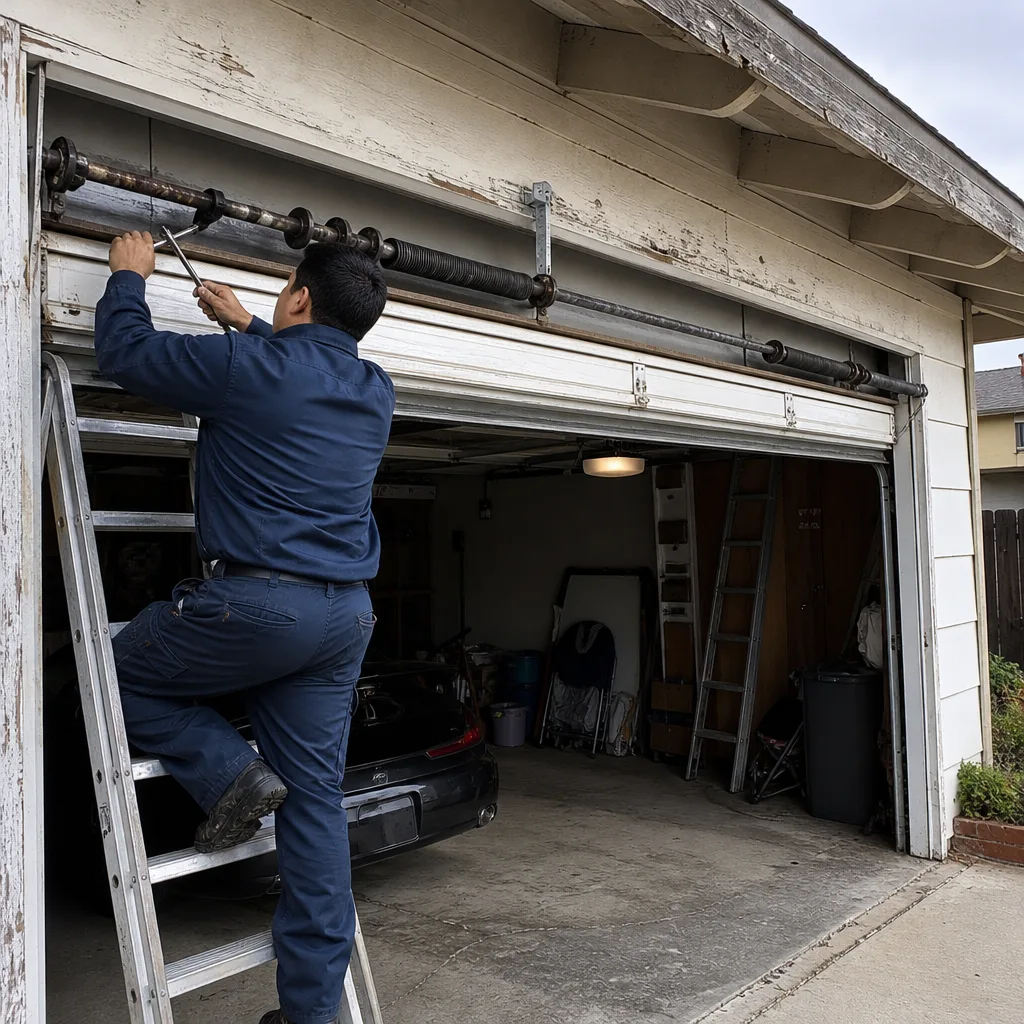 Before
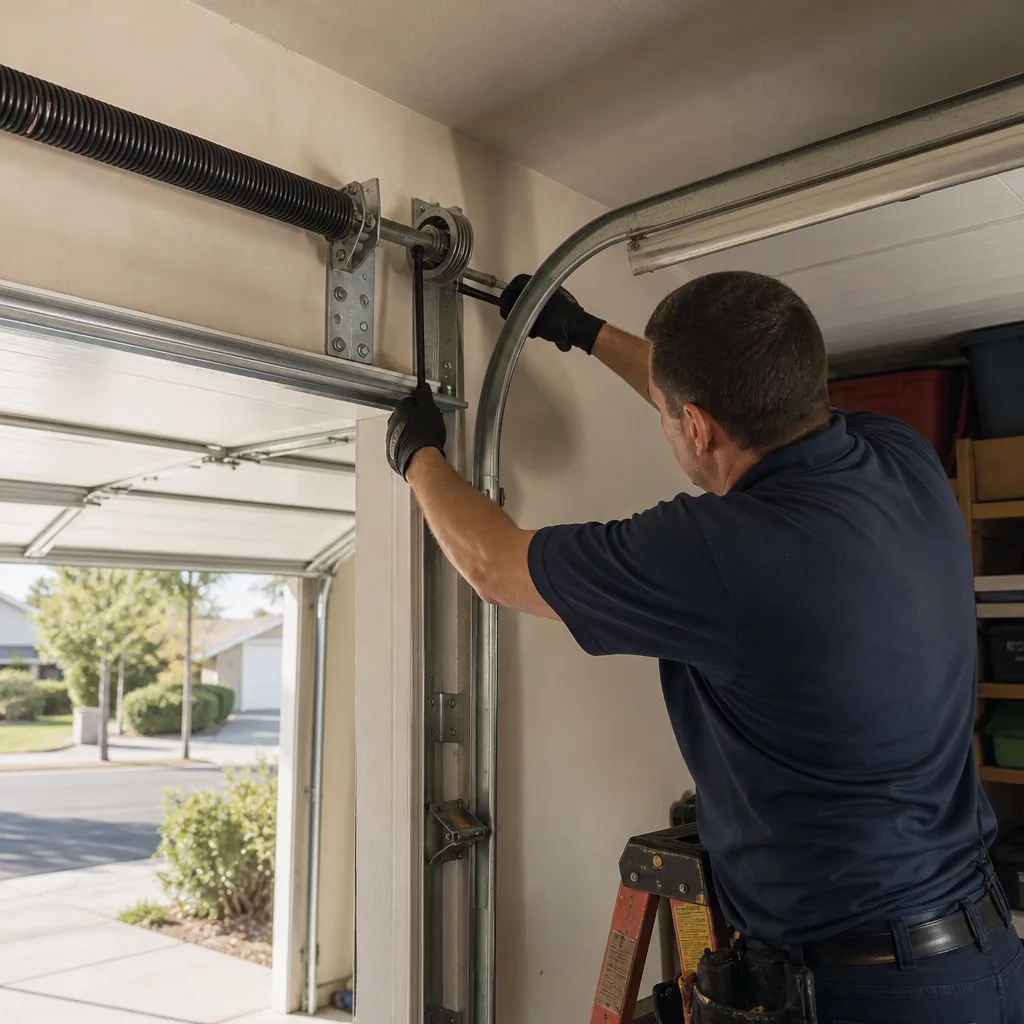 After
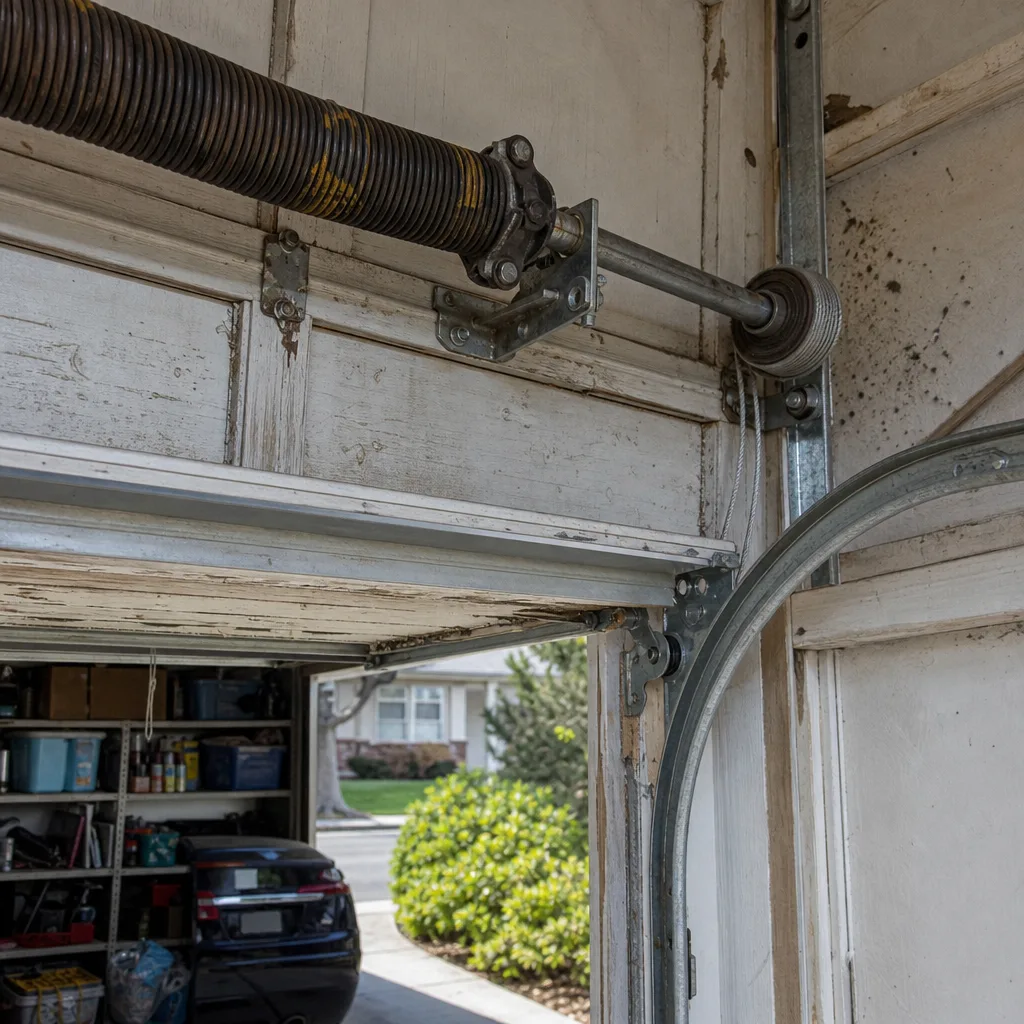 Before
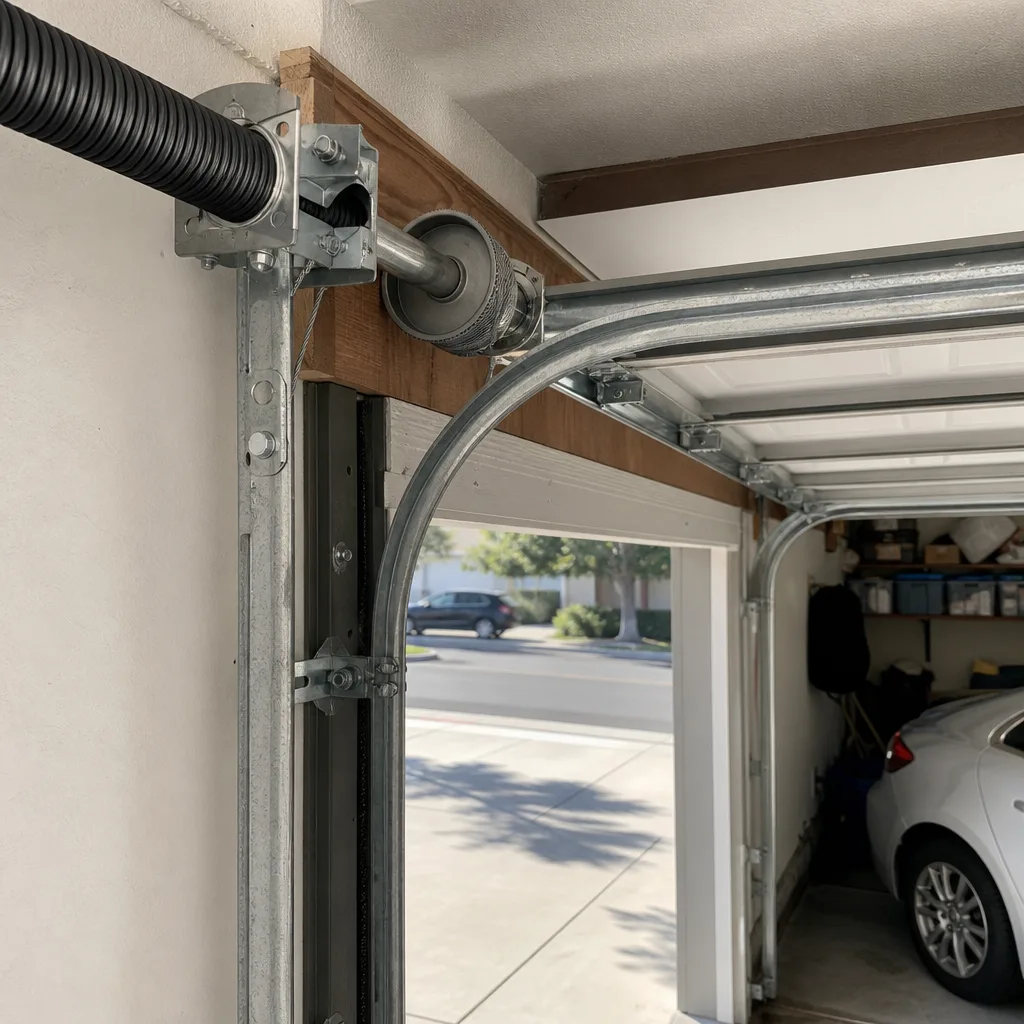 After
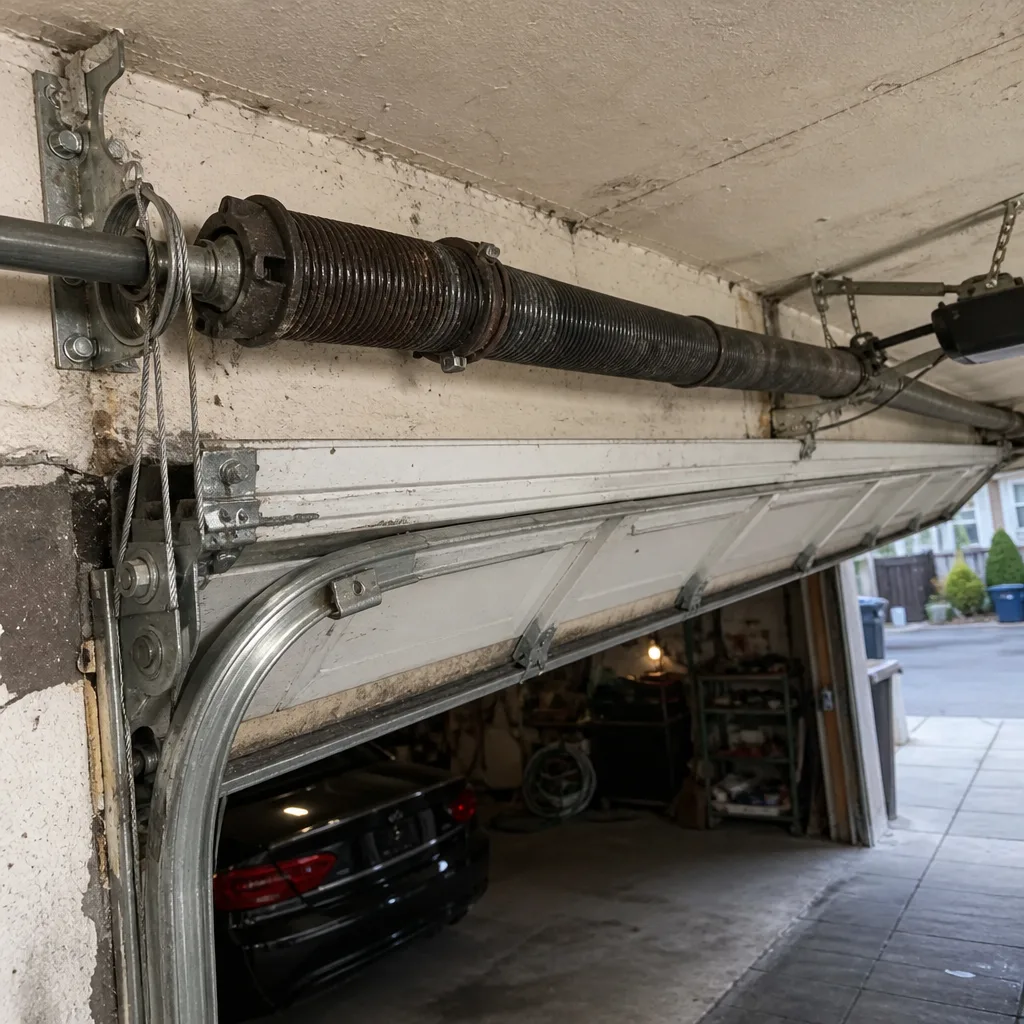 Before
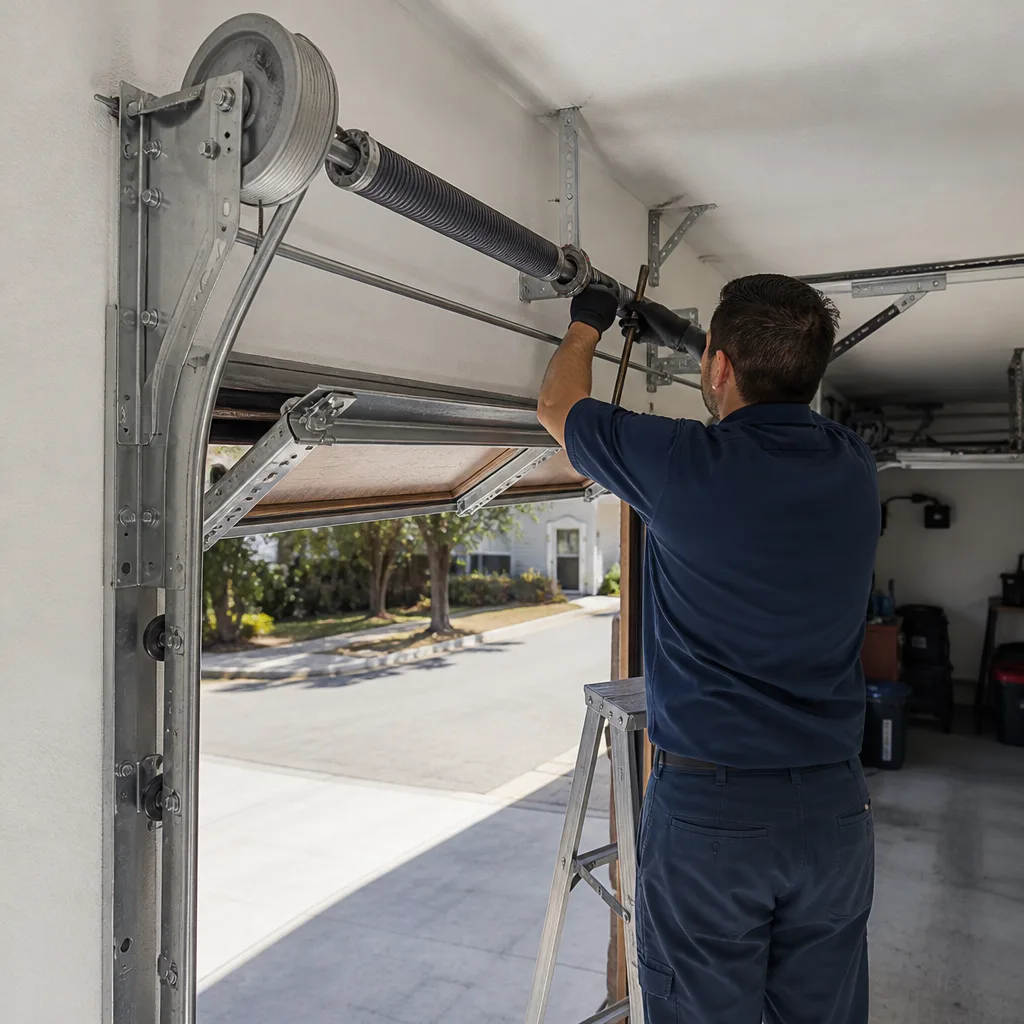 After
When to Call a Professional
Some homeowners are comfortable with light maintenance: lubricating rollers, tightening hinge bolts, cleaning sensor lenses. That’s reasonable. But the moment you’re dealing with spring tension, cable tension, or any issue where the door’s weight is involved, a professional is the only safe option. Garage door springs and cables hold enormous tension. A spring that lets go while you’re working near it can cause serious injury. Every year, homeowners end up in emergency rooms from DIY attempts on garage door tension systems. It’s not worth it.
If you’ve identified any of the same-day warning signs above, or if your door is making a new sound you can’t identify from this guide, call. Anchor Garage Door Repair offers free estimates in Burbank, and we’ll walk you through what you’re seeing over the phone before we ever schedule a visit. Our team works on every major brand, from Chamberlain and Genie to Clopay and Amarr, and we diagnose by symptom and mechanics rather than by brand manual. That’s the difference between a company that knows garage doors and a company that knows one garage door.
For a free estimate in Burbank, call (833) 589-9142. If it’s an emergency, say so. If you’re just monitoring a noise and want a second opinion, that’s fine too. We’d rather take your call at the warning-sign stage than the broken-door stage.
Frequently Asked Questions
The most common warning sign we see in Burbank is a door that shudders or jerks on the opening cycle, which points to uneven spring tension. It’s more common here than in coastal areas because our dry climate and heat cycles accelerate spring fatigue. Call (833) 589-9142 for a free estimate if you’re seeing this symptom.
The cost depends entirely on which warning sign you’re seeing. A squealing roller is a minor repair. A shuddering door that points to spring replacement is a bigger job. Any price you get should be quoted and agreed before work starts, so you know exactly what you’re paying up front. Call (833) 589-9142 and we’ll give you a clear quote over the phone.
Yes, in most cases we can narrow down the likely cause from your description of the sound, movement, and timing. Precise symptom language (like “it shudders going up but feels fine coming down”) lets us prepare before we arrive. We’ll ask specific questions to zero in on what’s happening, so call (833) 589-9142.
Monthly. The five-minute ground-level inspection catches most developing failures before they become emergencies. In Burbank’s dry, dusty climate, roller and hinge wear progresses faster than in coastal homes, so a monthly rhythm gives you the best chance of early detection.
We service all the major brands, including Chamberlain, Genie, Clopay, and Amarr. If you have a door or opener from any of these manufacturers, we know the system and carry compatible parts. If you’re not sure what brand you have, check the opener housing or the inside door panel, and we’ll confirm during the call.
Test your safety sensors first using the 2×4 method, then check whether the photo-eye lenses are dirty or misaligned. If the problem continues, call (833) 589-9142. This is a safety system issue and should be addressed promptly. We’ll quote your repair before any work begins.
The Bottom Line
Your garage door talks. It tells you, through sound and movement, what’s wearing, what’s straining, and what’s about to fail. The homeowner who learns to listen saves money, avoids emergency calls, and keeps a home secure. The warning signs in this guide cover the most common failure modes we see in Burbank, from spring tension imbalances to safety sensor degradation, and the symptom-to-cause mapping should give you the confidence to describe problems accurately when you call for service. No matter what brand of door or opener you have, the mechanics are consistent. The signs are consistent. And a repair caught at the warning-sign stage is always cheaper and faster than a repair made after the break.
For garage door repair, opener repair, or a new installation, call Anchor Garage Door Repair at (833) 589-9142. If you’re seeing any of the warning signs above, call sooner rather than later. Estimates are free, and we’ll quote the price before any work starts.
Written by the team at Anchor Garage Door Repair, serving Burbank since 2011.