
Last updated November 2, 2026
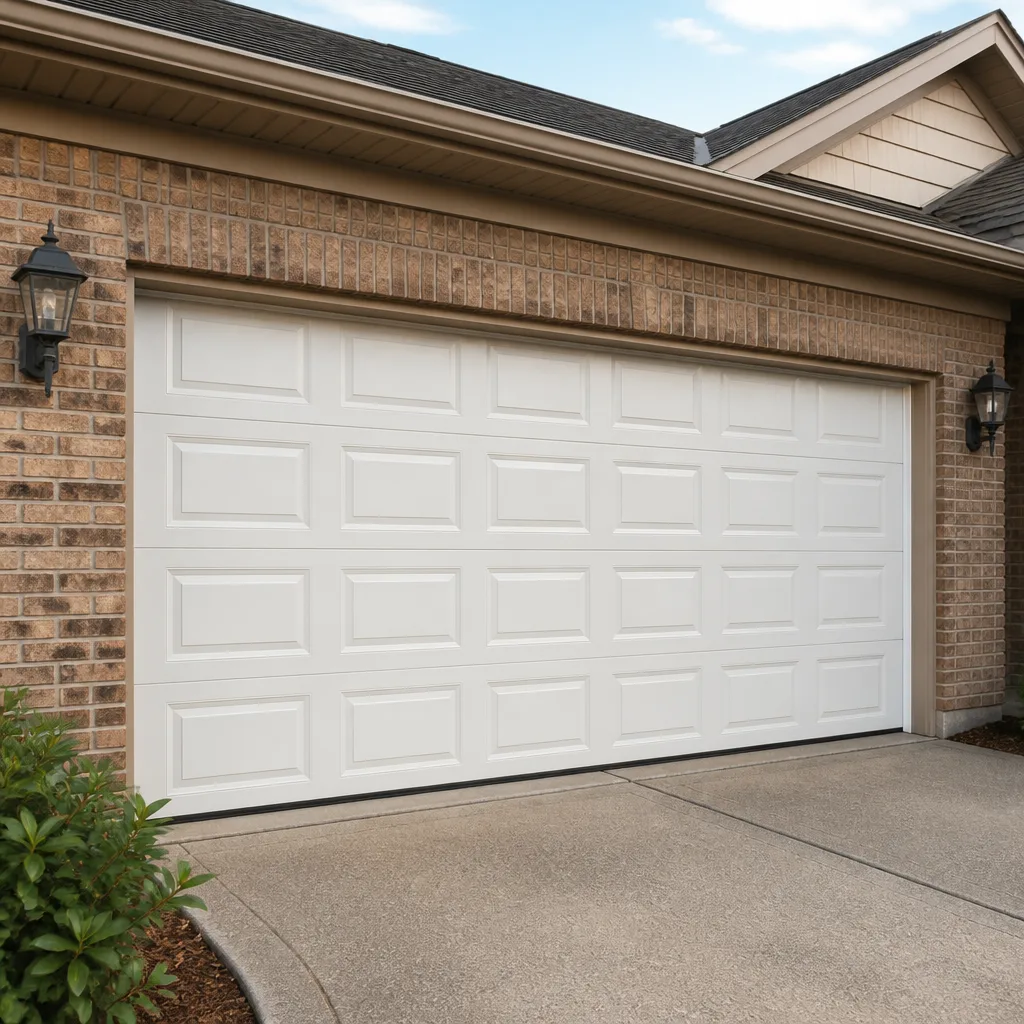 Raised-panel steel
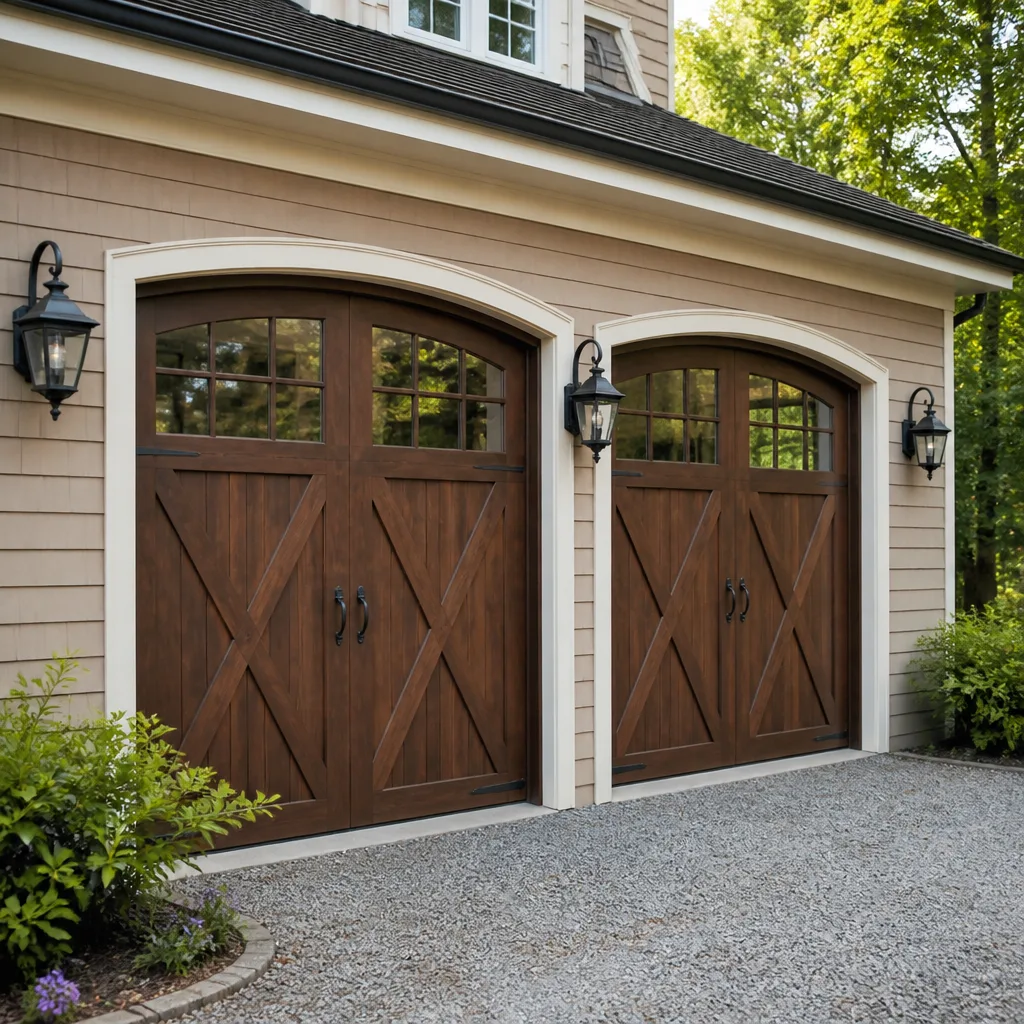 Carriage house
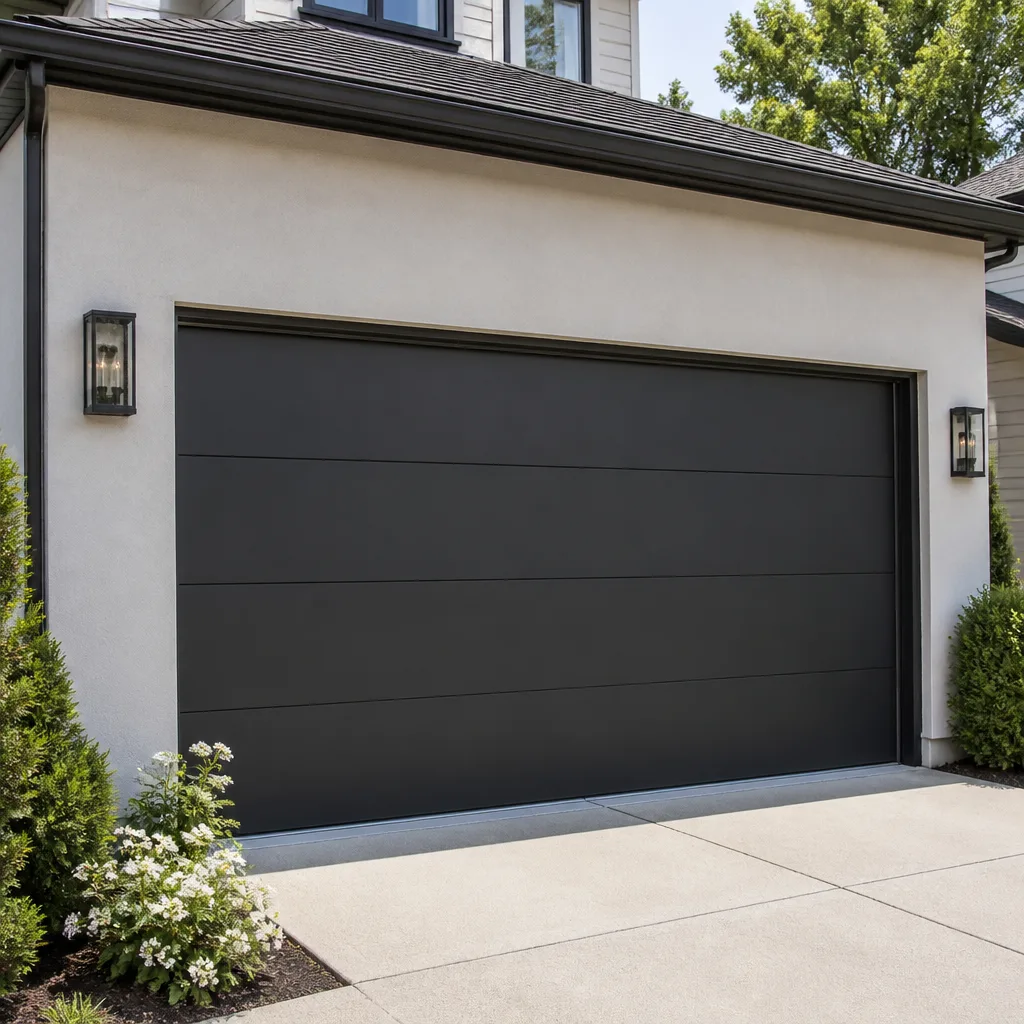 Modern flush
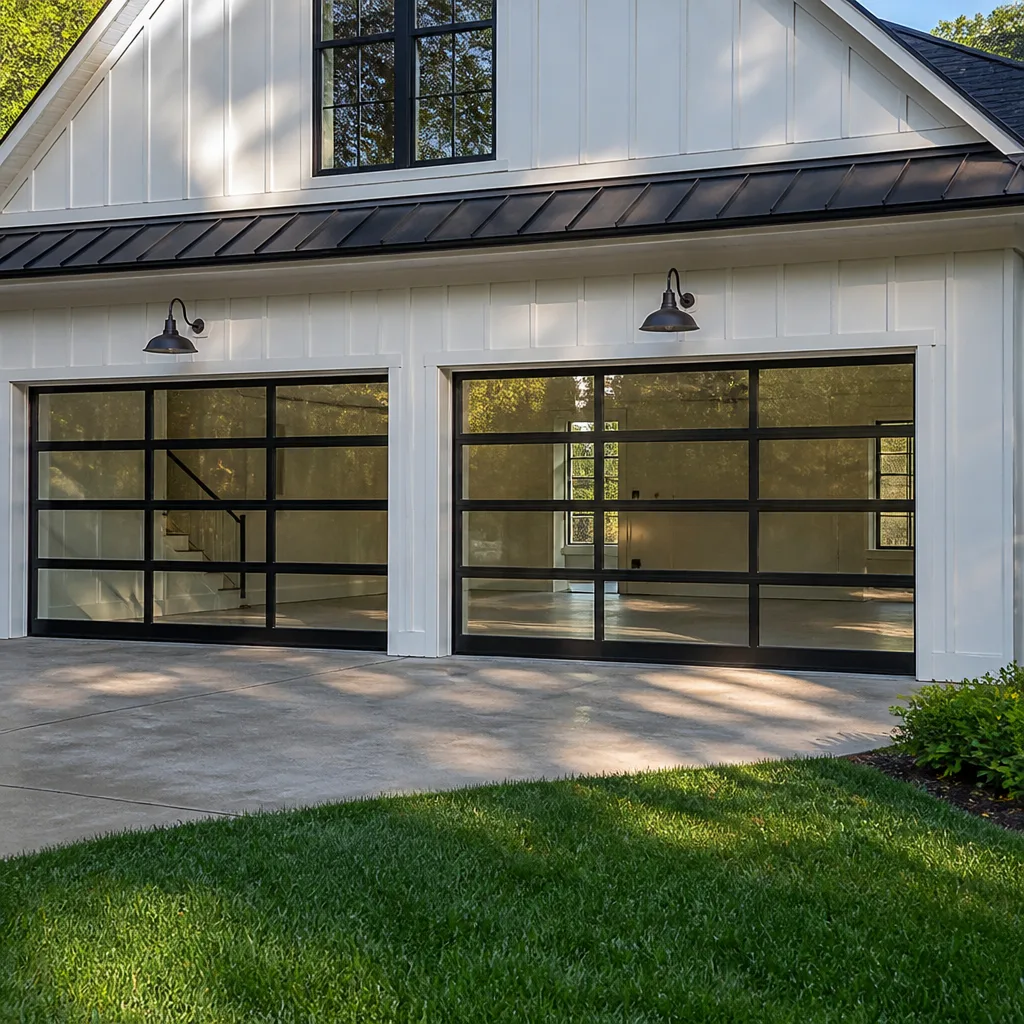 Full-view glass
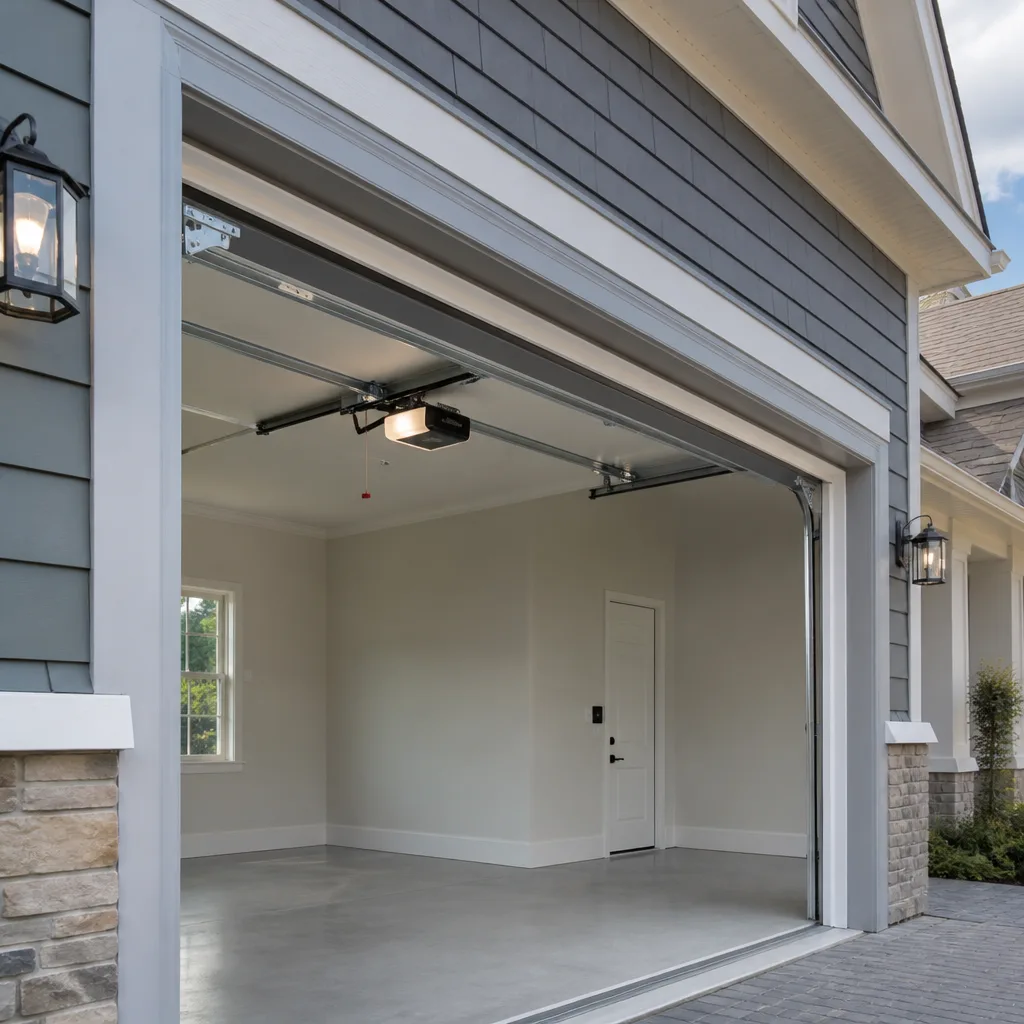 LiftMaster openers
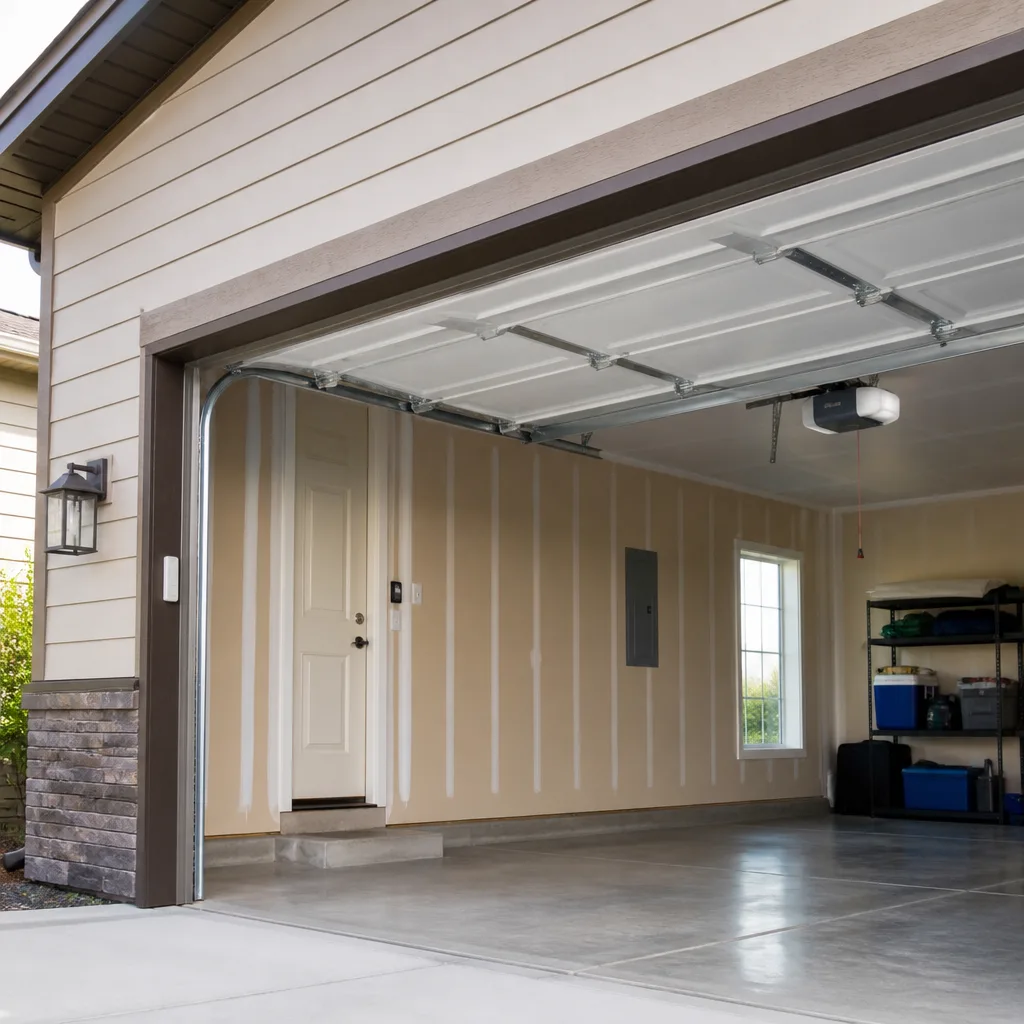 Chamberlain openers
Full 25-point door and opener safety check with every visit - springs, cables, rollers, tracks, and your LiftMaster or Chamberlain opener included
You get a price before we start. It does not change when the truck arrives.
Get your free estimateDIY vs Professional Garage Door: The Burbank Homeowner’s Decision Guide
Torsion springs kill. That sounds dramatic, but ask any emergency room physician in Los Angeles County and they’ll tell you the same thing: garage door spring injuries are common, severe, and frequently involve homeowners who thought they knew what they were doing. The most dangerous person in this story isn’t the first-timer watching a YouTube tutorial with trembling hands. It’s the guy who replaced a spring once, five years ago, and now figures he’s got it down. That confidence is what sends people to the hospital with broken forearms, crushed fingers, and worse. This guide exists because Burbank homeowners deserve better information than a 9-minute video can provide; for more, see our more guides & resources. You’ll learn which garage door tasks are genuinely safe for a competent DIYer, which ones you should never touch, what California law says about unpermitted work, and how to spot a bad tutorial before it gets you hurt.
Styles & brands we work with
- Raised-panel steel
- Carriage house
- Modern flush
- Full-view glass
- LiftMaster openers
- Chamberlain openers
Quick Answer
You can safely handle garage door sensor alignment, lubrication, weatherstripping replacement, and basic remote reprogramming yourself. You should absolutely call a professional for torsion spring replacement, cable repair, track realignment, and panel replacement. The dividing line isn’t your skill level. It’s the stored mechanical energy in the system. In Burbank, a professional garage door repair typically costs $150 to $400 for most non-spring repairs, while a single DIY mistake on a spring can cost you thousands in medical bills and a door that won’t open.
Table of Contents
- The Mechanics of Risk: Why Some Garage Door Tasks Are Forgiving and Others Aren’t
- DIY-Safe Tasks (And How to Do Them Right)
- Professional-Only Tasks: The Mechanical Reasons
- California Liability and Insurance: What Burbank Homeowners Need to Know
- The Real Cost Comparison: Tools, Time, and One-Mistake Recovery
- Opener Brand Firmware: What You Can and Can’t Do Yourself
- How to Vet a YouTube Tutorial: Three Things Real Experts Always Show
- Common Mistakes to Avoid
- When to Call a Professional
- Frequently Asked Questions
- The Bottom Line
The Mechanics of Risk: Why Some Garage Door Tasks Are Forgiving and Others Aren’t
Garage doors come in two flavors: extension-spring systems and torsion-spring systems. Extension springs stretch along horizontal tracks on either side. Torsion springs sit on a metal shaft above the door opening and twist to store energy. Most homes built in Burbank after the 1980s use torsion systems, and that matters because torsion springs store energy differently than extension springs. A torsion spring under full tension holds roughly 50 to 100 pounds of torque per spring, and most doors have two. Released suddenly, that’s enough force to break bone.
Here’s the thing nobody tells you in the comments section: a garage door appears to have zero energy when it’s closed. The springs are loaded, but nothing is moving. That stillness is deceptive. The moment you loosen the wrong bolt, the energy transfers through the winding cone, the shaft, or the cable, and you have a fraction of a second to get your hands out of the way. This is why classification matters more than skill. A task is DIY-safe when the maximum consequence of a mistake is a minor inconvenience. A task is professional-only when the maximum consequence is an emergency room visit. We’ve repaired doors in the Magnolia Park and Rancho Equestrian neighborhoods after both kinds of outcomes, and the spring injuries are never worth the couple hundred dollars saved.
Burbank’s climate adds another layer. The dry heat of the San Fernando Valley causes metal fatigue faster than coastal conditions. Springs that would last 10 years in Santa Monica often snap in 7 or 8 in Burbank. That means more Burbank homeowners face spring replacement than average, and more of them are tempted to try it themselves. The math rarely works out.
DIY-Safe Tasks (And How to Do Them Right)
Some garage door maintenance tasks are genuinely safe for a homeowner with basic tools and a willingness to read instructions. These tasks share a common trait: you can see the problem, you can test your fix immediately, and the worst-case scenario is that the door still doesn’t work and you call a professional anyway. You haven’t lost anything but time.
1. Photo-eye sensor alignment
If your door reverses immediately after touching the ground, the safety sensors near the bottom of each track are likely misaligned. These sensors shoot an invisible beam across the door opening. When the beam breaks, the door reverses. Fixing this is a matter of loosening the wing nut, aiming the sensor at its partner, and watching the indicator light turn solid. Ten minutes of work. Zero mechanical risk.
2. Lubrication
Metal rollers, hinges, and the torsion spring itself all benefit from a silicone-based lubricant applied every six months. Don’t use WD-40. It’s a solvent, not a lubricant, and it’ll strip the protective coating from your spring. Use white lithium grease or a dedicated garage door lubricant. In Burbank’s heat, this maintenance matters more than in cooler climates because metal expands and contracts more dramatically. A dry hinge in August squeals and binds.
3. Weatherstripping replacement
The rubber strip along the bottom of your door and the vinyl trim around the frame degrade in direct sun. Burbank gets plenty of that. Replacement strips cost $15 to $40 at any hardware store, and installation involves sliding the old strip out and the new strip in. No tension, no cables, no risk.
4. Remote and keypad reprogramming
Most modern openers have a “Learn” button on the motor unit. Press it, press the remote button, and you’re paired. If your opener is a Chamberlain or LiftMaster from the last 15 years, this is genuinely simple. If you’ve lost all your remotes and need to wipe the memory, there’s a procedure for that too, and the owner’s manual walks you through it.
These four tasks cover about 80% of the truly safe DIY garage door work. Everything else on this page falls into the other category for a reason.
Professional-Only Tasks: The Mechanical Reasons
Some tasks should never be attempted by a homeowner, regardless of how many videos they’ve watched. Here’s the breakdown of what separates a dangerous task from a safe one, and the specific mechanical reason behind each prohibition.
Torsion spring replacement
This is the big one. Torsion springs store energy by twisting, not stretching. To replace one, you have to wind the new spring using two steel winding bars inserted into the cone. Each quarter-turn adds tension. A typical spring requires 30 to 36 quarter-turns, meaning you’re holding a loaded spring at close range while applying significant force. If a winding bar slips, it becomes a projectile. If the spring snaps during winding, the cone can fracture and throw shrapnel. In our experience across Burbank service calls, we’ve seen unwinding accidents bend garage wall studs. That’s the energy we’re talking about.
Cable replacement and re-threading
Garage door cables work with the springs, not independently. A cable that snapped on a torsion system usually means the door was already out of balance, and the spring tension needs to be released before the cable can be safely rerouted. If you try to thread a new cable while the spring is still loaded, you’re working against hundreds of pounds of tension. The cable can whip loose and slice through whatever it hits. This includes skin.
Track realignment and structural header work
If your tracks are bent or the header above the door has shifted, the door is no longer traveling in a straight line. This puts uneven load on every other component: springs, cables, hinges, rollers. Correcting it requires releasing spring tension, repositioning the tracks, re-hanging the hardware, and re-tensioning the springs. The diagnosis alone requires experience because the visible symptom (a grinding noise, a door that binds halfway up) rarely points directly at the actual problem.
Panel replacement on a torsion system
Replacing a damaged panel sounds straightforward until you realize the spring tension has to be released because the door’s weight distribution changes during the repair. The bottom panel is under the most stress because it carries the weight of everything above it. Removing it without releasing tension is asking the door to collapse unexpectedly.
We service all of these on a regular basis through our Garage Door Repair in Burbank service, and the pattern is consistent: the homeowner who calls us before attempting a spring repair spends less money overall than the one who calls us after.
California Liability and Insurance: What Burbank Homeowners Need to Know
California’s building code doesn’t require a permit for simple garage door repairs like spring replacement or opener installation, but for anything structural you’ll want to review Garage Door Permits, Codes & Inspections in CA: What You Need to Know. That’s the good news. The bad news is that unpermitted structural modifications do require permits, and the line between repair and modification is not always obvious to a homeowner.
If you replace a garage door with a different size or weight than the original, or if you alter the framing around the door opening, you’ve technically done work that requires a permit from the City of Burbank’s Building Division. If that work fails and causes damage, your homeowner’s insurance can deny the claim on the grounds that the work was unpermitted and the policyholder assumed the risk. Insurance adjusters in California are specific about this. They don’t deny claims because you did DIY work. They deny claims because your DIY work was faulty and unpermitted, and the policy language excludes coverage for damage caused by unpermitted alterations.
There’s another layer: California follows a “pure comparative negligence” standard. That means if a contractor installs a door improperly and it injures someone, the homeowner’s liability is reduced by the contractor’s share of fault. But if the homeowner did the work themselves, there’s no contractor to share fault with. The homeowner carries the full liability. For Burbank homeowners with rental units, ADUs, or guests who use the garage regularly, this is a real consideration.
The practical takeaway: replace springs, fix openers, repair cables without a permit. But if you’re changing the door’s weight class, altering the opening, or doing anything structural, call a licensed professional and ask about permits. A legitimate company will know what Burbank requires.
The Real Cost Comparison: Tools, Time, and One-Mistake Recovery
DIY advocates love to quote the parts-only price. A pair of torsion springs costs $60 to $100. A professional spring replacement in Burbank runs $180 to $350. “Do it yourself and save $250!” The math ignores everything that actually matters.
The real DIY cost breakdown for spring replacement
- Springs: $60 to $100
- Winding bars: $20 to $30 (you cannot safely use screwdrivers or rebar)
- Time: 3 to 6 hours for a first-timer, most of it spent watching videos and second-guessing yourself
- Risk-adjusted cost: $0 if everything goes perfectly, up to $5,000+ if a spring snaps and you need medical care plus a professional to fix what you broke
Meanwhile, a professional spring replacement in Burbank takes 60 to 90 minutes and includes balancing the door, lubricating all moving parts, and a safety check of the cables and tracks. The price quoted is the price you pay, agreed before work starts. That last part matters. Homeowners consistently tell us their two biggest fears about calling a pro are getting overcharged and getting a surprise invoice. At Anchor Garage Door Repair, the price is locked before we touch the door. No add-ons, no “while we’re in there” upcharges.
The one-mistake recovery cost
If you attempt a spring repair and the winding bar slips, you’re not just paying for the professional to finish the job. You’re paying for the professional to undo whatever you did first. That means releasing tension on a half-wound spring, inspecting for damage to the shaft and cones, and replacing any component you weakened. A $100 spring project becomes a $300 restoration, assuming you didn’t hurt yourself. If you did hurt yourself, the math changes entirely. One urgent care visit for stitches in Burbank runs $150 to $500 with insurance. A broken bone is $2,000 to $10,000. The savings disappear instantly.
Opener Brand Firmware: What You Can and Can’t Do Yourself
Garage door openers have evolved from simple relay switches into small computers with proprietary firmware. This matters for the DIY question because some brands lock their programming tools behind dealer accounts. You physically cannot do certain repairs without equipment that isn’t sold to consumers.
Chamberlain and LiftMaster (same parent company) use a proprietary programming tool for advanced diagnostics. The basic remote pairing is homeowner-accessible. The deeper functions, like force-sensitivity recalibration and travel-limit reprogramming after a board replacement, require a dealer tool. Craftsman openers from the last decade are mostly Chamberlain units with different branding, so the same rule applies. Genie is more open but still requires specific sequence codes for some programming functions. Raynor openers are rebadged Chamberlain or Genie units depending on the year, which means the brand on the cover doesn’t always tell you what’s inside.
Our Garage Door Opener Repair in Burbank service exists specifically because these systems fail in ways that aren’t homeowner-diagnosable. A homeowner can swap a remote battery or reprogram a keypad. A logic board failure, a burned-out transformer, a force-sensitivity issue that causes the door to reverse at random – these require diagnostic equipment and brand-specific knowledge. We carry the programming tools for every major brand we service, including LiftMaster, Chamberlain, Genie, Craftsman, and Raynor.
How to Vet a YouTube Tutorial: Three Things Real Experts Always Show
YouTube has thousands of garage door repair videos. Some are excellent. Some are actively dangerous. Here’s how to tell the difference before you pick up a wrench.
1. They show the tension release process in full
A credible torsion spring tutorial will spend significant time showing how to release tension safely before any disassembly begins. The process involves inserting winding bars, holding pressure, loosening set screws, and letting the spring unwind slowly. A bad tutorial glosses over this step or cuts away during it. If the person in the video says “you’ll figure this part out” or skips ahead, close the tab.
2. They mention the door’s weight and spring size
Garage doors have specific weight ratings. Springs are color-coded and sized to match. A real professional will explain how to read the spring’s color code, measure the door, and verify you have the right replacement before installation. A bad tutorial acts like one spring fits all doors. In Burbank, where wood doors from the 1960s and steel doors from the 2000s sit side by side on the same street, getting the wrong spring is a common and dangerous error.
3. They show a safety check at the end
After installing a spring, a real technician tests the door’s balance by disconnecting the opener and manually lifting the door to waist height. A properly balanced door stays put. A door that falls or rises has the wrong spring tension. This test is non-negotiable in professional work. If the tutorial ends without demonstrating it, the person making the video doesn’t understand the system well enough to teach it.
If a tutorial fails any of these three checks, assume the person making it hasn’t been professionally trained. And if you’re ever unsure about anything you see in a video, call someone who does this work every day, or consult our Garage Door Emergency Preparedness Guide for Burbank Homes. We’d rather answer your question on the phone than read about a Burbank homeowner who trusted a bad tutorial.
Common Mistakes to Avoid
- Assuming all springs are the same. Extension springs and torsion springs fail differently, require different tools, and carry different risks. If you don’t know which type you have, you don’t have a repair plan.
- Using screwdrivers as winding bars. A screwdriver shaft is not rated for the torque a torsion spring requires. It will bend or snap, and you’ll be holding the consequences.
- Releasing tension on a torsion spring without understanding the mechanics. Each quarter-turn of a winding bar adds measurable torque. If you don’t know how many quarter-turns your spring has, you can’t release it safely.
- Skipping the balance test after any spring or cable work. An unbalanced door destroys openers, wears out rollers, and snaps cables. The test takes 30 seconds.
- Overlooking Burbank’s heat when choosing replacement parts. Cheap springs wear faster in the San Fernando Valley’s summer temperatures. Quality matters more here than on the coast.
- Trusting a tutorial that skips the safety steps. If the video doesn’t show tension release, door weighing, and the final balance check, it’s not a tutorial. It’s a highlight reel.
- Deleting your opener’s memory when you only meant to add a remote. That “Learn” button has multiple functions. A long press wipes all remotes. A short press adds one. Read the manual before you press anything.
When to Call a Professional
Call a professional when the repair involves torsion springs, cables, tracks, or anything that requires releasing tension from the system. Call a professional when your opener makes a grinding noise, reverses randomly, or refuses to respond to remotes and the wall button. Call a professional when your door is off its tracks, sagging on one side, or making sounds it never made before. These are signs of problems you cannot diagnose from a video.
Anchor Garage Door Repair offers free estimates in Burbank. We work on LiftMaster, Chamberlain, Genie, Clopay, Amarr, Wayne Dalton, Craftsman, and Raynor doors and openers, so your specific system is covered. One call covers repair, opener work, and full installation. Call (833) 589-9142 and we’ll tell you what’s wrong and what it costs before any work begins.
Frequently Asked Questions
We strongly advise against it. Torsion springs store enough energy to cause serious injury if released incorrectly, and the tools and technique required are not intuitive. A professional spring replacement in Burbank costs $180 to $350 and includes balancing and safety checks. Call (833) 589-9142 for an exact quote.
Most non-spring repairs in Burbank run between $150 and $400, while spring replacement typically runs $180 to $350 depending on the door’s weight and spring type. Opener repairs range from $100 for simple issues to $400 for logic board replacement. The price is quoted and agreed before any work starts.
If your DIY work is faulty and causes damage, your homeowner’s insurance may deny the claim, especially if the work involved unpermitted modifications. Simple repairs don’t need permits, but structural changes do. Faulty DIY work also leaves you with full liability since there’s no contractor to share the fault.
We service LiftMaster, Chamberlain, Genie, Clopay, Amarr, Wayne Dalton, Craftsman, and Raynor. Between these eight brands, we cover the vast majority of residential doors and openers in Burbank.
Photo-eye sensor alignment is the easiest and safest. If your door reverses when closing, loosen the wing nut on one sensor, aim it at the opposite sensor, and watch for the indicator light to turn solid. Ten minutes of work with zero mechanical risk.
Look for a visible gap in the spring coil, listen for a loud bang when the door is in use, or check if the door feels unusually heavy when you lift it manually. Any of these signs means the spring is close to failing. Call a professional before it snaps completely.
The Bottom Line
The DIY versus professional garage door question in Burbank comes down to one distinction: forgiving versus dangerous. Sensor alignment, lubrication, weatherstripping, and remote programming are forgiving. Spring replacement, cable work, track repair, and panel replacement are dangerous. The cost savings from DIY work on dangerous tasks are wiped out by the cost of one mistake, and in California, that mistake can follow you into an insurance claim. If you’re not sure which category your problem falls into, describe it to a professional before touching anything. We’re at (833) 589-9142, and the phone consultation is free. Visit our Anchor Garage Door Repair home page or our Garage Door Installation in Burbank page to learn more about what we do. Fixed right, not just for now.
Written by the team at Anchor Garage Door Repair, serving Burbank since 2011.
See the difference
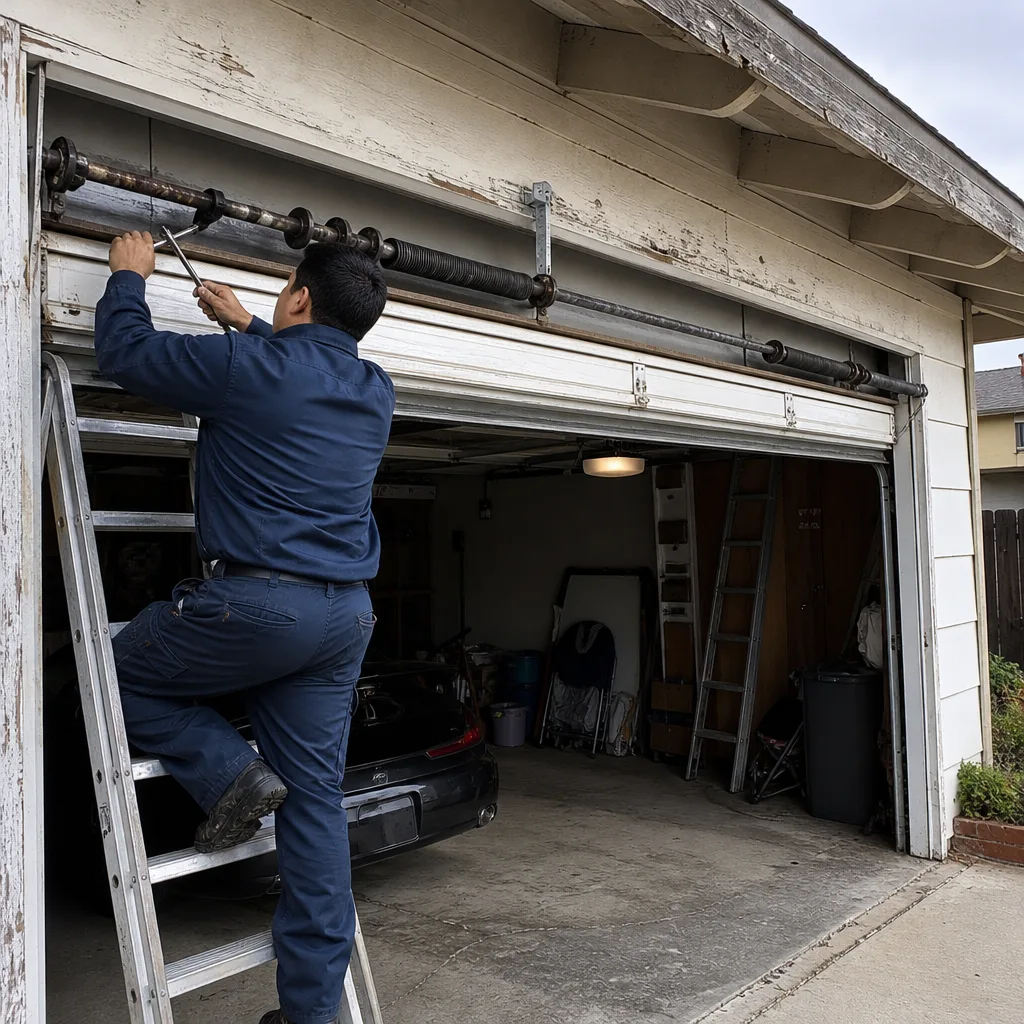 Before
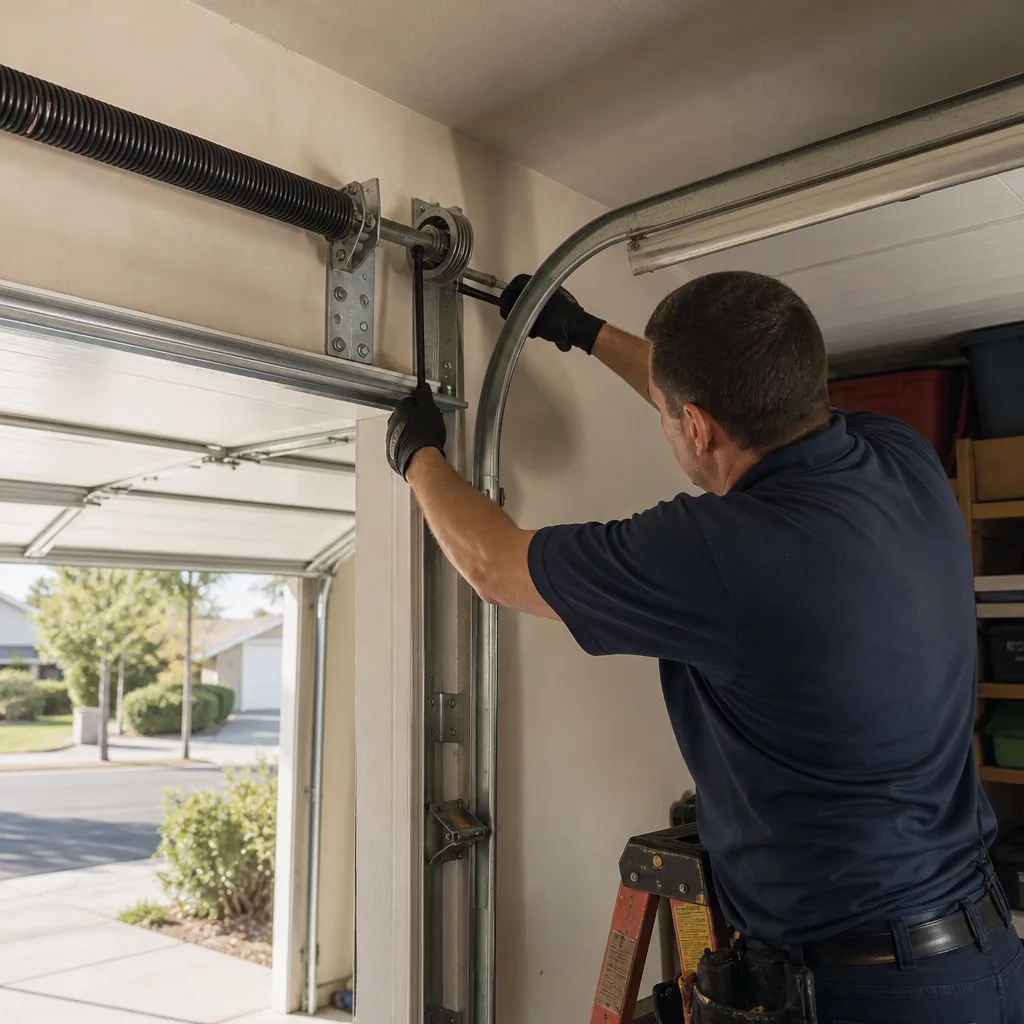 After
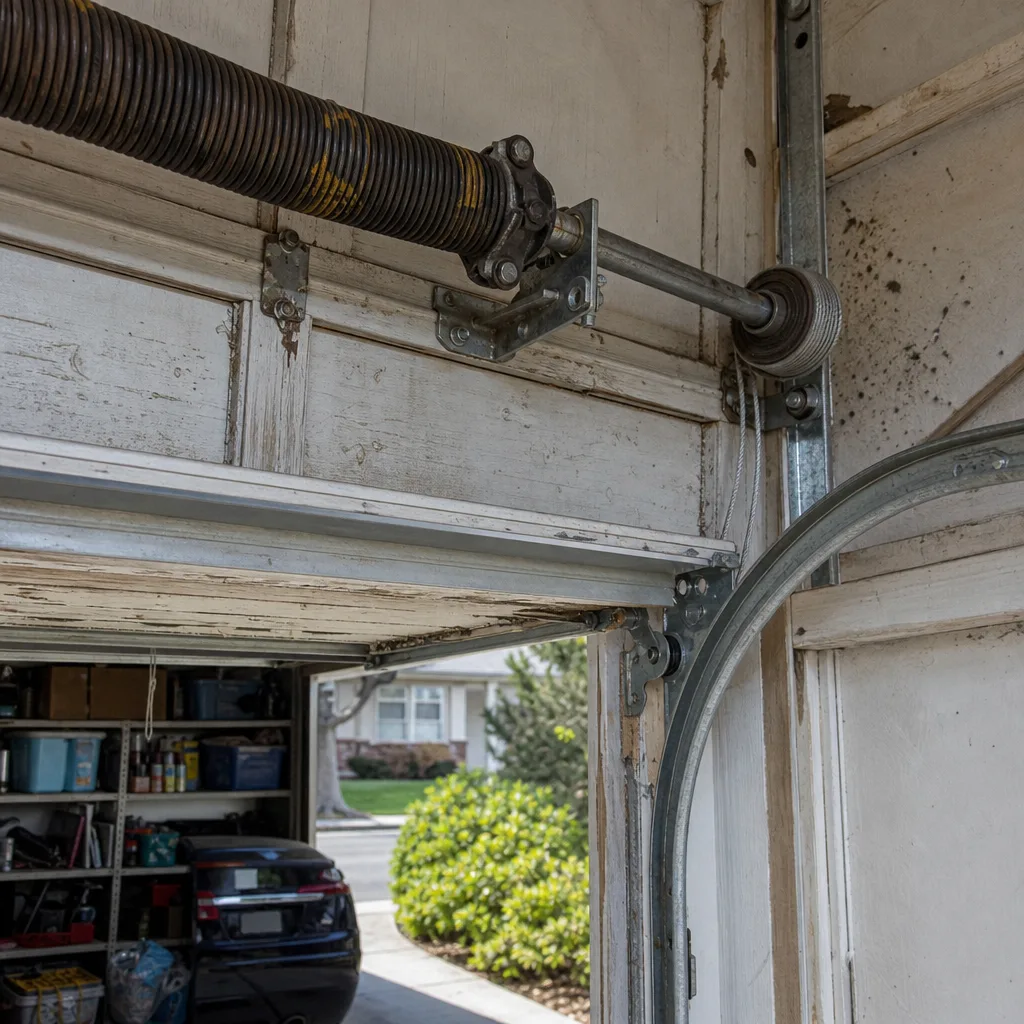 Before
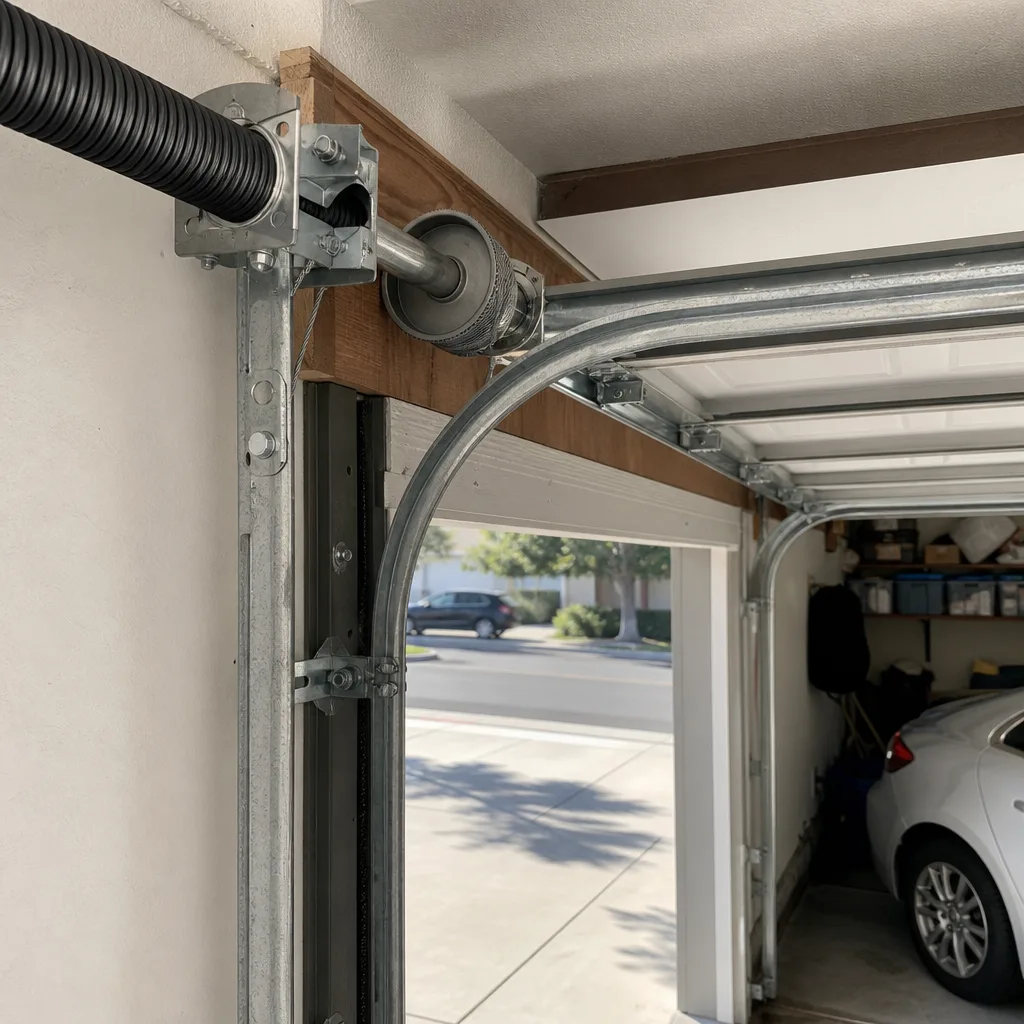 After
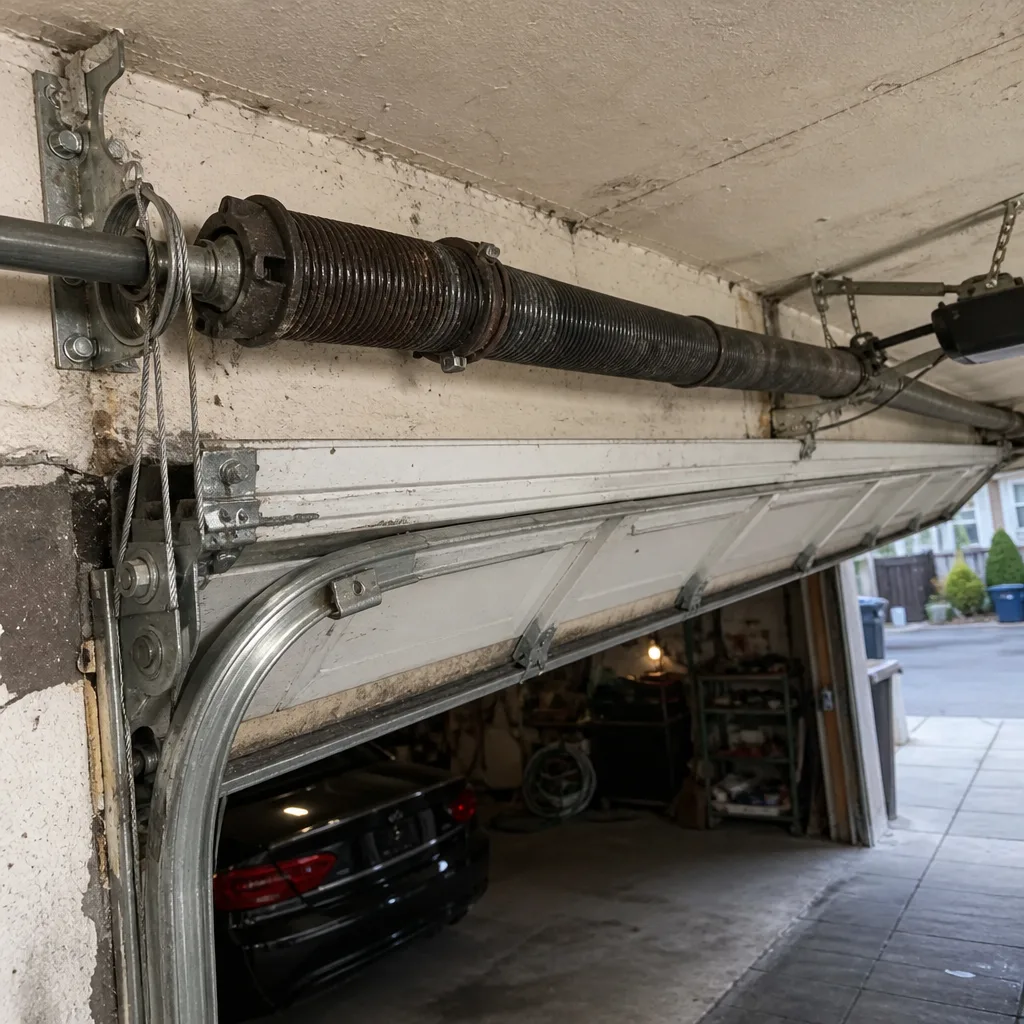 Before
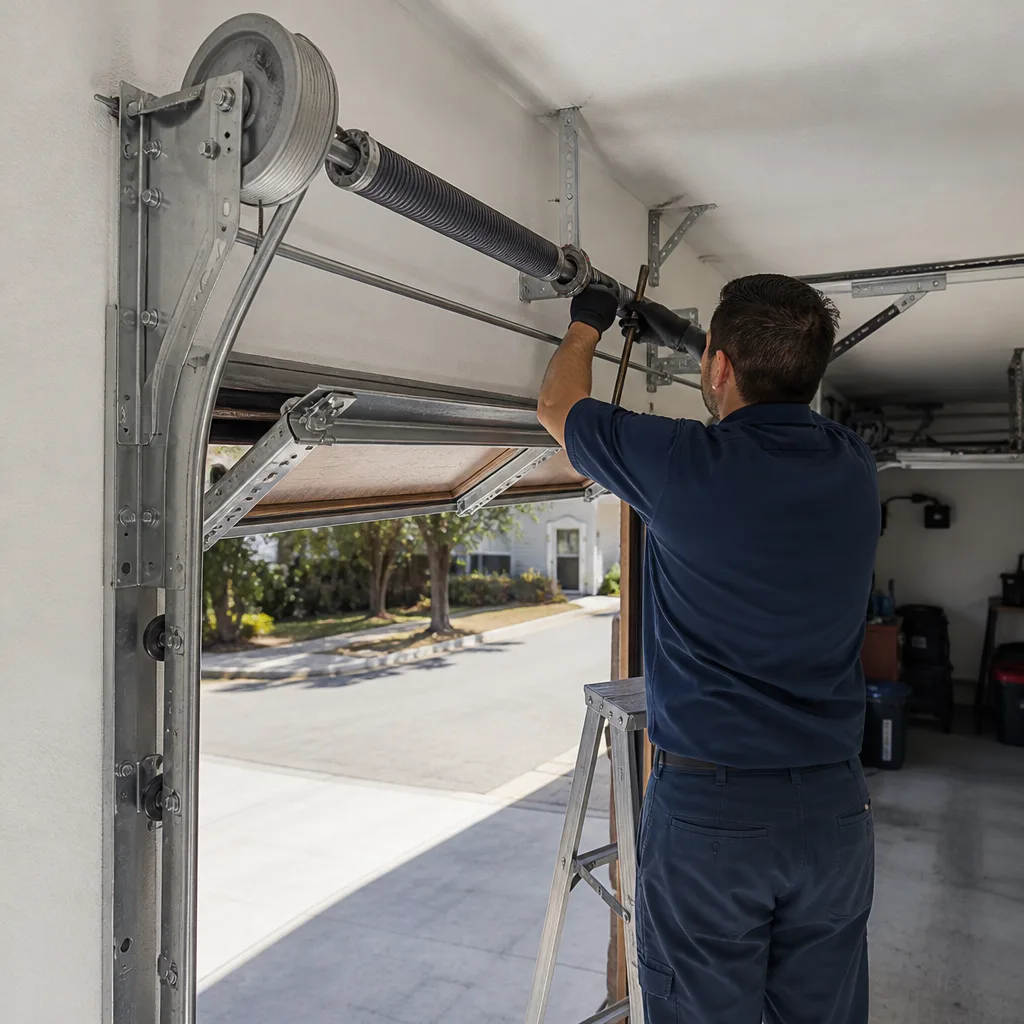 After